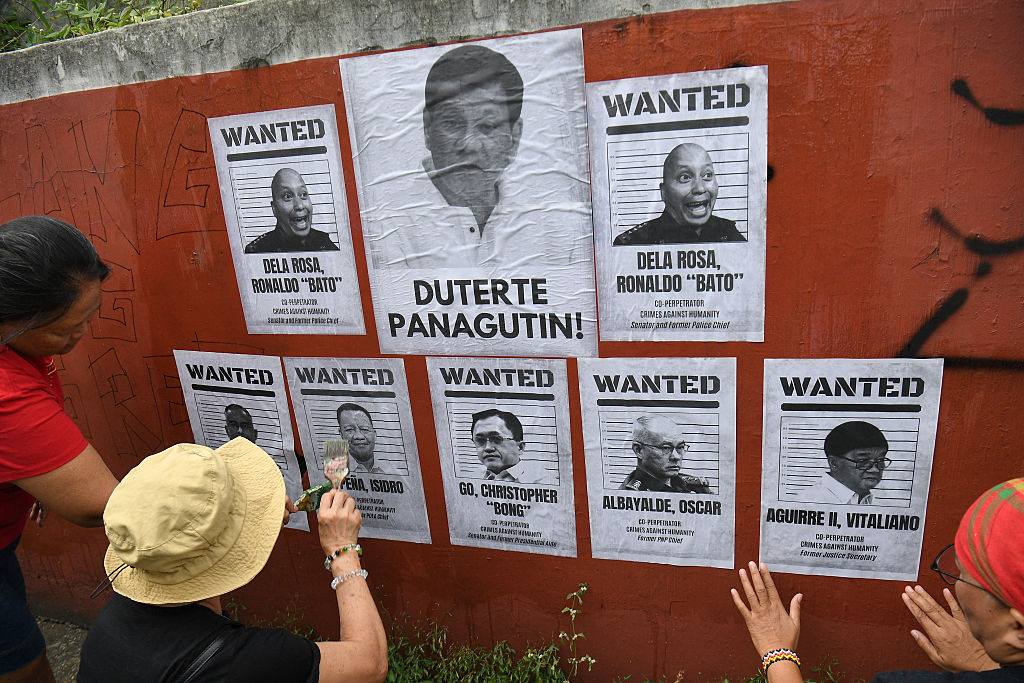
The International Criminal Court (ICC) has become the epicenter of a high-stakes geopolitical chess match between the Netherlands and the Philippines as they vie to represent former Philippine President Rodrigo Duterte in his landmark trial. This clash is not merely a procedural matter but a critical test of global justice systems, international law, and the very principles of accountability for crimes against humanity.
Who Will Defend Duterte? A Test of Legal Sovereignty and Moral Authority
The Philippines, a country with a long history of complex legal frameworks and a deep-seated skepticism toward international courts, has insisted that it has the legal right to defend its former leader. The Dutch government, which has been the primary advocate for the ICC’s jurisdiction over Duterte’s alleged crimes, has countered with strong legal arguments. This standoff highlights the tension between national sovereignty and the binding nature of international legal mechanisms. The Philippines has consistently argued that the ICC lacks the authority to prosecute its own citizens, a position that has been widely criticized by experts in international law as a significant obstacle to the court’s credibility and effectiveness.
Proponents of the ICC’s role in holding leaders accountable emphasize that the court’s mandate is to address crimes that transcend national borders, such as the alleged extrajudicial killings, abuses of power, and systemic violence associated with Duterte’s tenure. The Philippines, on the other hand, has framed the issue as a matter of national sovereignty and the protection of its citizens from external interference.
- The Netherlands, hosting the ICC, has argued that the court has the authority to prosecute individuals for crimes against humanity and other international crimes, regardless of the country’s location.
- The Philippines has maintained that the ICC’s jurisdiction over its nationals is limited to cases where the state has explicitly consented to the court’s authority, a stance rooted in its historical relationship with the UN and the ICC.
- The conflict underscores the challenges of achieving universal compliance with international legal norms, especially in regions where state power is often intertwined with political and economic interests.
As the trial progresses, the outcome will set a precedent for how international courts handle cases involving powerful political actors from non-Western nations. The implications extend far beyond the immediate context of the Philippines and the Netherlands, influencing global perceptions of the ICC’s role and effectiveness in upholding justice.
The broader context of this case reveals the fragility of global justice systems in the face of powerful geopolitical interests. The decision will have significant implications for the future of international criminal law and the ability of the ICC to operate independently and effectively.