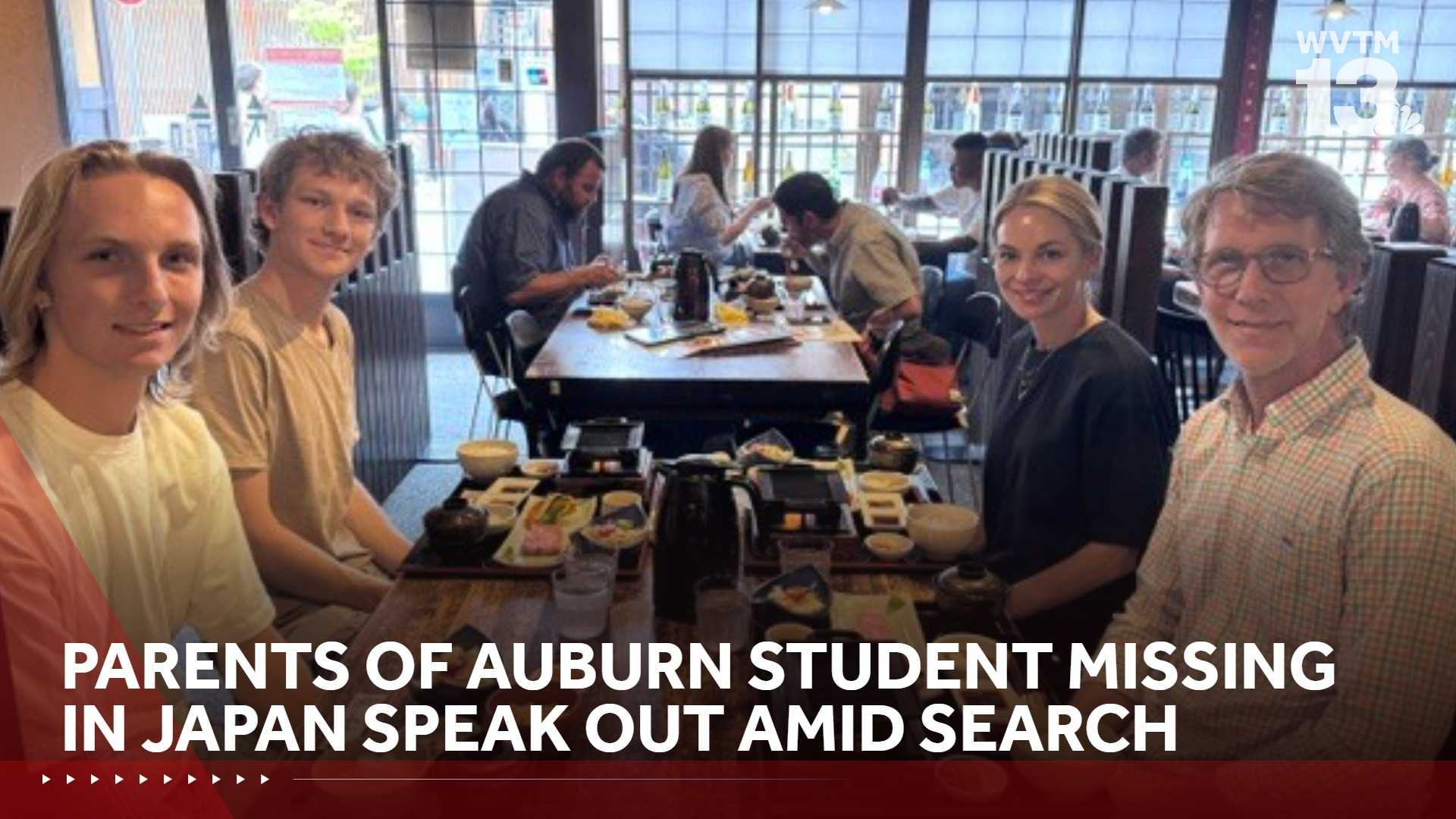
Weston Higginbotham's Family in Crisis: A Journey Through Grief and Hope

Editor 03 Jun, 2026 ... min lectura

James 'Weston' Higginbotham, a student from Auburn, Alabama, has become the center of an intense search operation across international borders as his disappearance raises alarms about the complexities of modern student mobility and international safety networks. The case has drawn attention to the vulnerabilities faced by young people traveling internationally for education or other purposes, highlighting critical gaps in emergency response systems. The parents' plea for help underscores the emotional and logistical challenges of missing persons cases that span multiple jurisdictions.

Weston’s family has been navigating a crisis that extends beyond their immediate location, with the search now unfolding in Japan—a country known for its advanced emergency protocols but also for its unique cultural and linguistic barriers. His parents have publicly acknowledged the difficulty of coordinating efforts across different legal systems and language barriers, stating, 'We are in our own living hell.' This statement captures the emotional toll of a situation where every second counts, and every communication channel is fraught with delays and misinterpretations.

How Do Missing Students Impact Global Safety Networks?

The case has sparked a critical examination of how international safety networks operate when a missing person crosses national borders. In Japan, where the search is currently focused, local authorities have implemented specialized protocols to track and coordinate with international agencies, but the absence of standardized communication channels remains a significant challenge. The family’s struggle illustrates how even the most advanced systems can falter when faced with a situation involving multiple countries, each with its own priorities and protocols.

What Role Do Community Actions Play in Missing Person Searches?

  • The local community in Japan has organized volunteer teams to assist in the search, demonstrating the power of grassroots efforts in critical times.
  • Online platforms have become vital for sharing information with the public, enabling real-time updates on potential leads.
  • Collaboration between international police forces and local authorities has increased significantly, though challenges remain in legal coordination.

As the search continues, the family’s story has also highlighted the role of social media in mobilizing support. Families of missing persons often rely on digital tools to share information quickly and widely, which can be life-saving in time-sensitive situations. However, this reliance also introduces risks, such as misinformation and privacy concerns.

The case has prompted discussions about the need for more robust international frameworks to address missing person cases that span multiple countries. Organizations like INTERPOL and the UN’s Missing Persons Network are working to improve coordination, but the reality for families like Weston’s remains deeply personal and urgent.