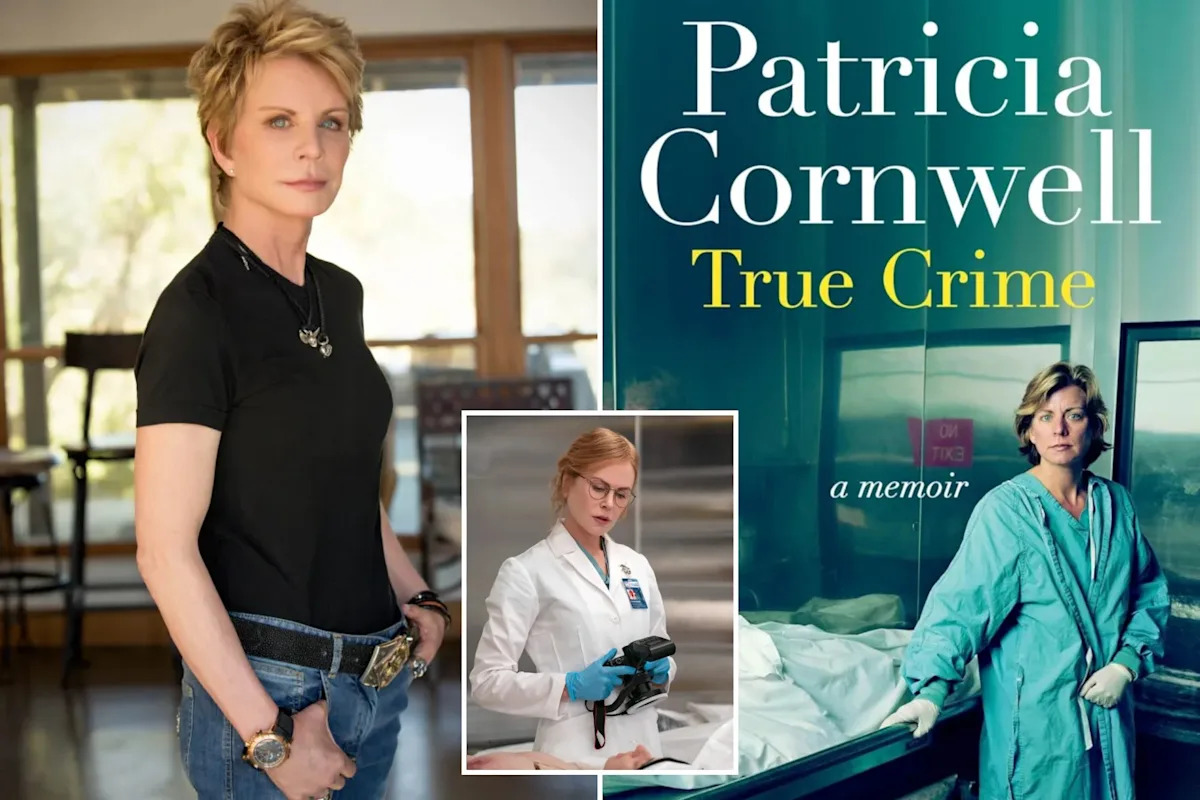
Patricia Cornwell’s journey from medical examiner to global crime thriller author reveals a life meticulously crafted around forensic precision and personal reinvention. At 24, she was already juggling a demanding career at a Virginia medical examiner’s office while conceiving the first page of what would become *Body Farm*—a novel so rooted in reality that critics called it 'the most authentic forensic crime novel ever written.' Her ability to merge clinical rigor with narrative artistry has made her a benchmark for the genre.
What sets Cornwell apart is her unapologetic authenticity. Unlike many authors who fictionalize crime, she uses real-world data from her 15-year tenure as a medical examiner to build her worlds. In *Scarpetta*, the character Dr. Amelia Scarpetta’s expertise in toxicology and pathology mirrors Cornwell’s own hands-on experience with human remains and crime scene dynamics. This isn’t just inspiration—it’s a direct translation of her life into compelling storytelling.
How did Patricia Cornwell transform her medical background into literary gold?
Cornwell’s secret lies in her refusal to compromise between science and fiction. She once told The New York Times that her work with the Richmond, Virginia, medical examiner’s office taught her that 'every death has a story worth telling.' Her first novel, *Body Farm*, was written after a pivotal moment: she attended a meeting at the same office where she later worked as a forensic analyst, and the experience became the blueprint for her literary career.
- Her collaboration with Billy Graham’s wife, Ruth, in the 1980s helped her refine her understanding of human behavior and trauma—key elements in *Scarpetta*’s psychological depth.
- She incorporated real data from her medical examiner days into *Body Farm*, where the 'body farm' concept—a controlled environment for studying decomposition—became a central plot device.
- Her first novel was written while working a 24/7 shift at the medical examiner’s office, balancing clinical work with the pressure of creating a novel that could 'make readers feel the weight of a body on a cold, damp floor.'
Cornwell’s process is as precise as her work. She doesn’t just write about crime; she immerses herself in its physicality. In *Scarpetta*, the character’s struggle with a rare, deadly illness mirrors Cornwell’s own battles with chronic illness and the emotional toll of forensic work. This personal connection creates a narrative that feels both intimate and scientifically airtight.
The impact of her work extends beyond books. Cornwell’s novels have been adapted into films and TV series, and her name is synonymous with forensic accuracy. Critics praise her for making the invisible visible—turning the mundane details of death and decay into gripping, human-centered stories.
For aspiring authors, Cornwell’s story offers a masterclass in authenticity. She demonstrates that the most powerful stories come from blending real-world expertise with a deep understanding of human vulnerability. Whether she’s dissecting a body or a character’s emotional arc, Cornwell’s work remains a touchstone for writers who want to explore the intersection of science and storytelling.



