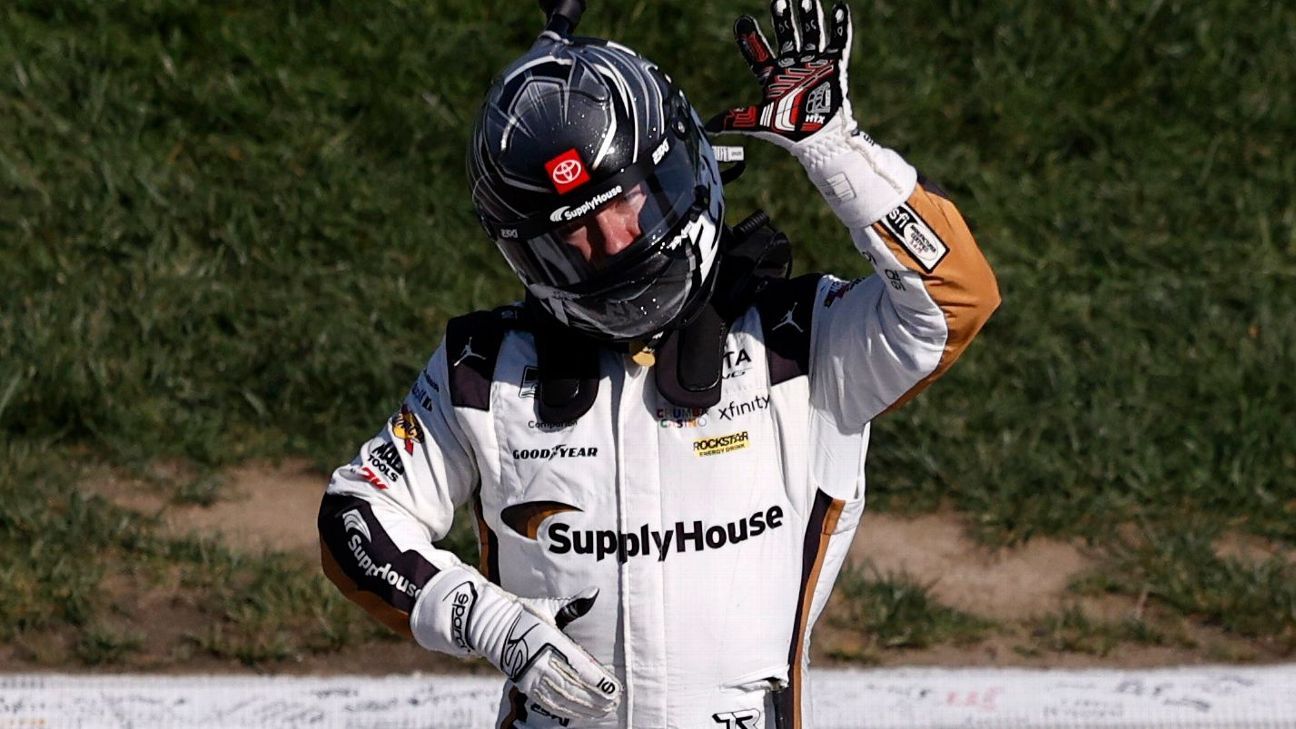
On April 19, 2026, Tyler Reddick made history by securing his fifth consecutive Cup Series victory at Kansas Speedway. His triumph marked a pivotal moment in NASCAR history, tying Dale Earnhardt’s record of five wins in the first nine races of a season—a feat last achieved in 1987. This milestone isn't just a personal achievement; it represents a seismic shift in how the sport is perceived and structured.
Why Tyler Reddick’s Five-Win Streak Matters for NASCAR's Future
Reddick’s accomplishment is more than a statistical curiosity. It underscores a growing trend in NASCAR’s strategic evolution, where consistency and adaptability are now central to success. Unlike the high-risk, high-reward style of the past, modern drivers like Reddick leverage advanced data analytics and real-time adjustments to optimize their performance in unpredictable conditions. For instance, his ability to navigate the challenging, steep banking of Kansas Speedway—a track known for its high-speed corners and aggressive drafting—demonstrates a mastery that has rarely been matched.
Historically, Earnhardt’s record of five early-season wins was groundbreaking in the 1980s, when technology and infrastructure were far less advanced. Today’s drivers benefit from a more sophisticated understanding of aerodynamics and track dynamics, allowing them to fine-tune their cars for specific conditions. Reddick’s approach, which combines precision timing with strategic positioning, has become the standard for elite performers in the Cup Series.
What Makes Kansas Speedway a Perfect Test for Modern Drivers?
- High-impact corners at Kansas require drivers to balance speed with precision, a skill that’s increasingly critical in today’s competitive landscape.
- Adaptive strategy is essential, as drivers must constantly adjust to varying track conditions and competing teams' tactics.
- Long-term consistency is now more vital than ever, with the rise of data-driven decision-making in racing.
Reddick’s fifth win at Kansas not only highlights his individual skill but also reflects broader industry shifts. The success of drivers like him signals a new era where preparation and adaptability are as important as raw talent. This shift has implications for how teams approach race strategies and how fans engage with the sport.
As NASCAR continues to evolve, the focus on data analytics and real-time adjustments will likely become even more pronounced. Reddick’s performance at Kansas serves as a microcosm of this transformation, showcasing how modern racing has moved beyond the high-stakes, unpredictable nature of the past.