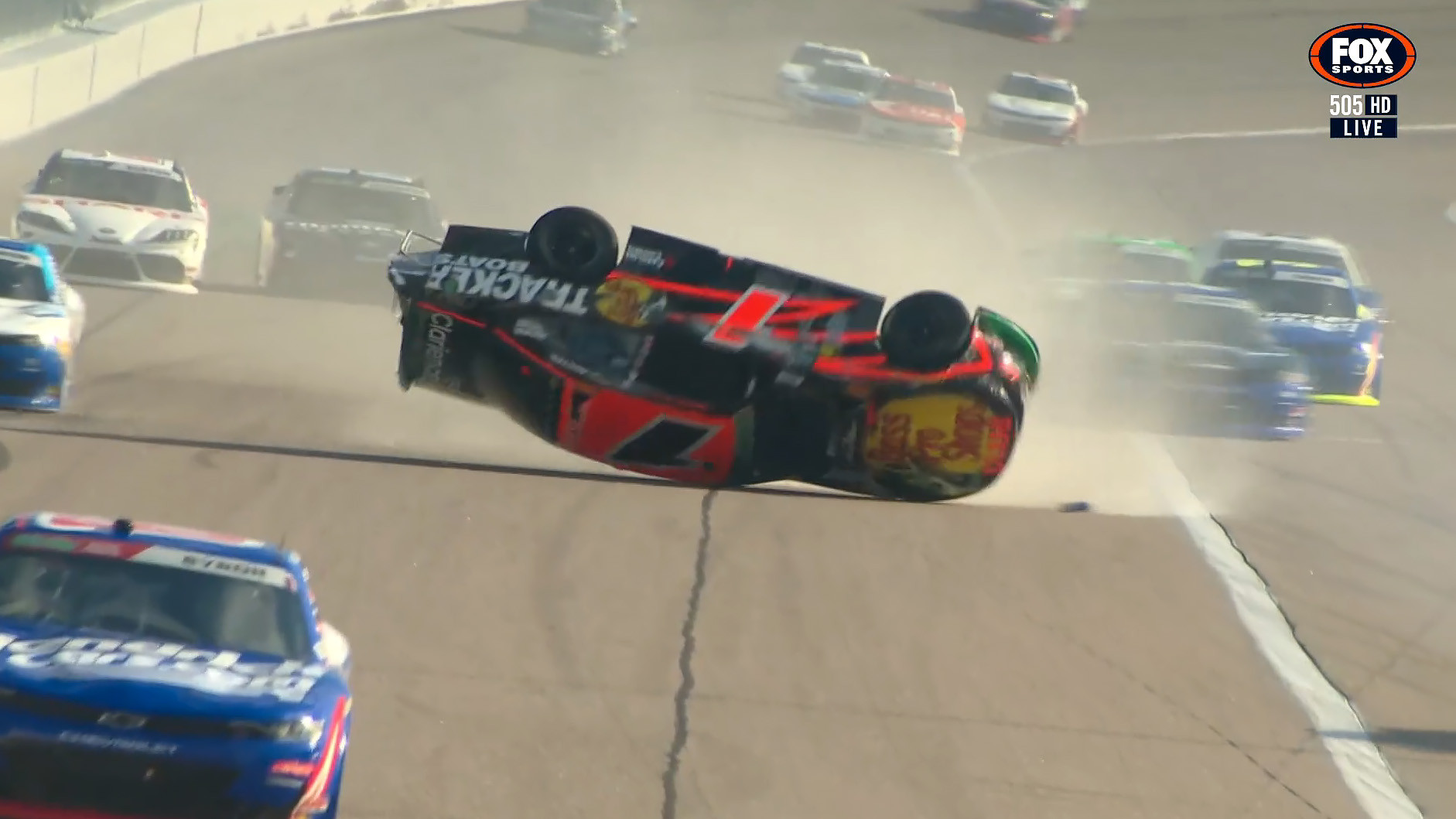
Carson Kvapil’s dramatic exit from the Kansas O’Reilly Series race on April 19, 2026, sent shockwaves through NASCAR’s competitive ecosystem. What began as a routine lap 2 sequence at Kansas Speedway transformed into a full-blown crisis when Kvapil’s car spun out of control, triggering a massive rollover crash that halted the entire race.
The incident, captured live by track cameras and social media, revealed a startling truth: even the most seasoned drivers can face unexpected chaos on the track. Kvapil, a rising star in the O’Reilly Series, had been performing steadily before the crash—a stark contrast to the high-stakes, high-speed chaos that followed.
How Did a Routine Lap Become a Disaster?
Track officials confirmed that Kvapil’s car lost stability during a sharp turn, causing it to pitch over and collide with multiple vehicles. This type of crash is rare but not unheard of in NASCAR, as seen in similar incidents involving drivers like Chase Elliott and Kyle Larson, who have faced similar challenges in the past.
What makes this event particularly concerning is its timing. With the O’Reilly Series known for its aggressive racing style, such a crash on lap 2 is unusually early. Historically, rollover crashes have been more common in the final laps of races, but this incident highlights the unpredictable nature of high-speed motorsports.
- Track conditions**: The day’s weather was clear, but the track surface had minor debris from previous laps, which may have contributed to the crash.
- Driver error**: Video analysis shows Kvapil’s car veered off course due to a sudden loss of traction, likely a misjudgment in the cornering process.
- Safety protocols**: NASCAR’s safety measures, including the halo device, have been tested in previous incidents, but this crash revealed gaps in real-time response to such emergencies.
Experts from the NASCAR Safety Committee noted that this crash aligns with a growing trend of early-stage rollover incidents, often linked to high-speed maneuvers in the early laps of races. The incident also underscores the importance of real-time data monitoring, which is increasingly critical in modern racing.
Despite the chaos, the race was eventually restarted after safety checks confirmed the track was clear. However, the incident has sparked discussions about the need for more advanced safety systems and better driver training protocols.
As the O’Reilly Series continues to evolve, this event serves as a critical reminder of the risks and unpredictability inherent in high-stakes racing. The incident has become a case study in motorsport safety, with many teams now incorporating more rigorous pre-race checks and real-time telemetry systems.