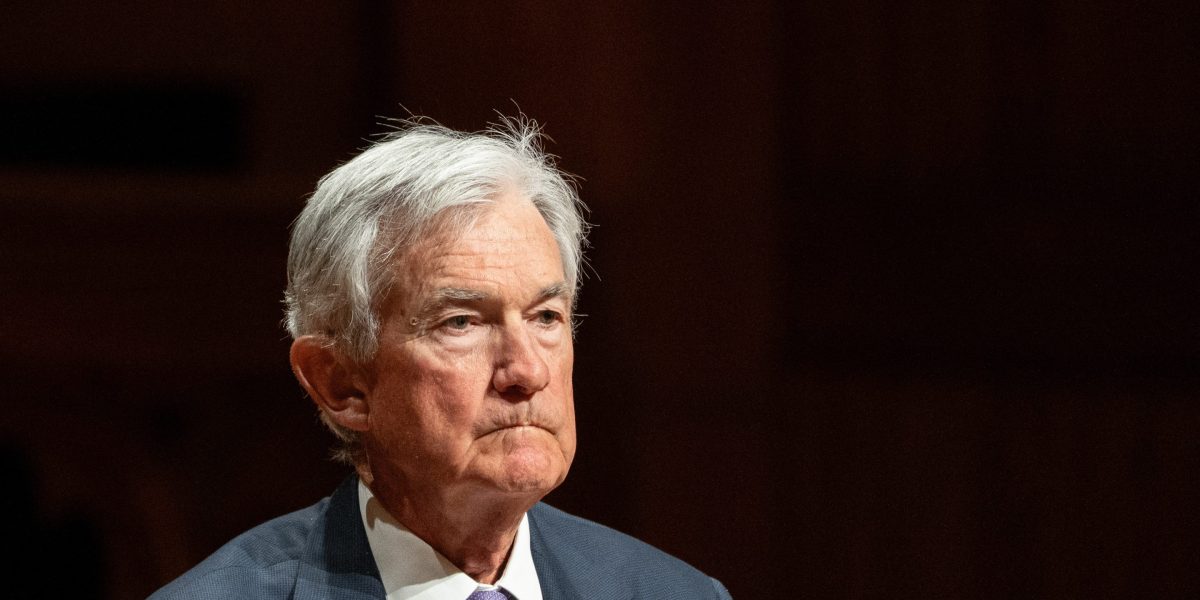
Jerome Powell, the Federal Reserve's current chair, has demonstrated remarkable resilience amid a storm of political volatility surrounding his position. As former President Donald Trump's attempts to reshape the Federal Reserve through controversial nominations have intensified, Powell's ability to maintain stability has become a critical focus for both economists and policymakers.
Recent developments reveal a complex interplay between political pressures and monetary policy. When Trump initially proposed Kevin Warsh as his replacement for Powell, this move raised immediate questions about the future of the Fed's leadership. The public and financial markets, however, reacted with skepticism, with many analysts predicting a potential shift in monetary policy direction.
Could Trump's Fed threats actually work?
One might argue that Trump's attempts to influence the Federal Reserve through direct threats to replace Powell could have significant implications for the economy. Yet, Powell's leadership has remained remarkably steady, suggesting that his ability to navigate political pressures is as strong as his expertise in economic policy.
Historically, the Federal Reserve has faced similar challenges, with past chairmen like Alan Greenspan and Janet Yellen navigating through periods of political tension. However, Powell's approach has been marked by a focus on data-driven decision-making, which has helped maintain confidence in the Fed's ability to manage inflation and economic growth.
- Trump's nomination of Kevin Warsh as a potential replacement for Powell has created uncertainty in financial markets.
- Analysts predict that Powell's steady hands could prevent immediate policy shifts that might disrupt market stability.
- Investors continue to monitor the Fed's actions closely, as any significant change in leadership could have ripple effects across global markets.
Despite the political turbulence, Powell's background in economic policy and his experience managing complex monetary frameworks have proven crucial. His tenure as chair has seen the Fed implement a range of measures to stabilize the economy, including targeted interest rate adjustments and forward guidance on inflation.
The Federal Reserve's independence has long been a cornerstone of its credibility, and Powell's ability to uphold this principle amid pressure is a testament to his expertise. As the Fed continues to address inflation and economic growth, Powell's leadership remains a key factor in maintaining market confidence.