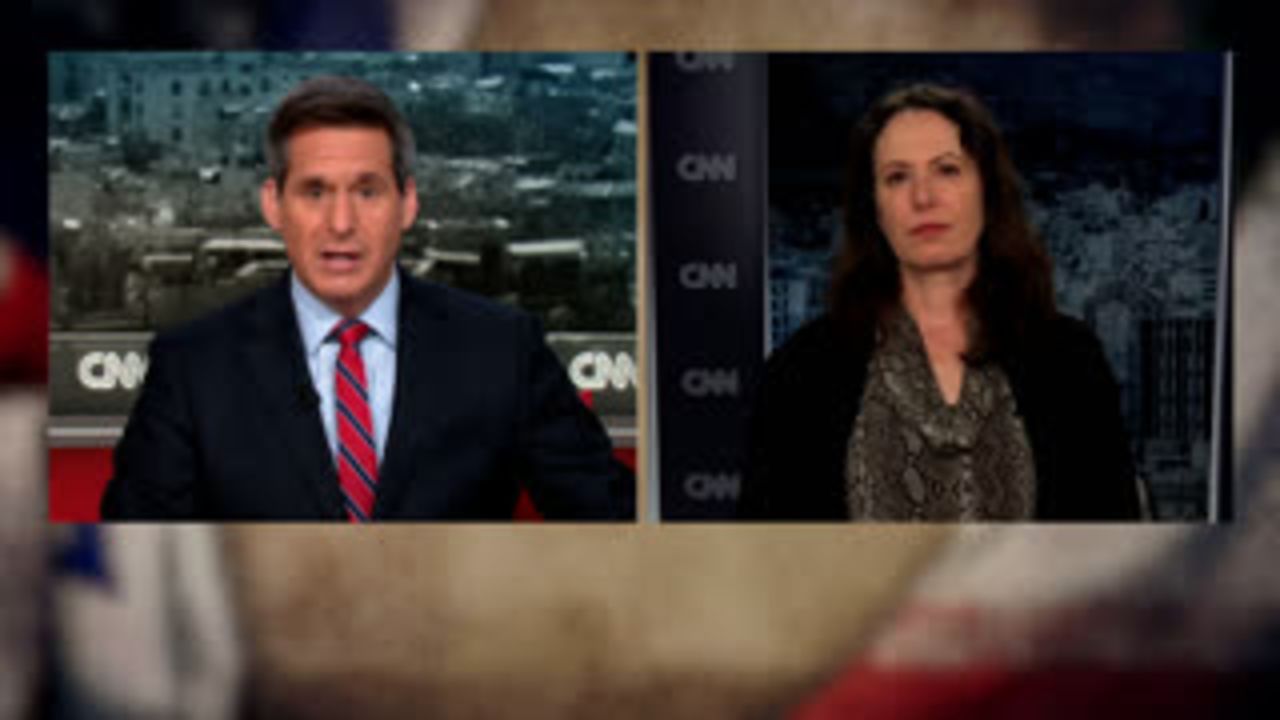
In a recent series of interviews, CNN's Maggie Haberman has highlighted a critical issue with President Trump's approach to the Iran conflict. Haberman's analysis suggests that Trump's thinking on this issue lacks depth and coherence, which has significant implications for U.S. foreign policy. This confusion is not isolated but part of a broader pattern of inconsistent messaging and strategic ambiguity that has emerged since the early days of Trump's administration.
Is Trump's Iran Strategy a Strategic Mistake?
According to Maggie Haberman, Trump's approach to the Iran conflict is not a well-thought-out strategy but rather a reactive and often contradictory stance. This inconsistency has been a key point of discussion in recent political discourse, with analysts and policymakers increasingly concerned about its potential consequences.
The situation has been further complicated by the recent ‘Morning Joe’ discussion on March 31, 2026, where hosts Mika Brzezinski and Joe Scarborough highlighted the risks of early withdrawal from the Iran war. They argued that such a move would create a ‘lose-lose proposition’ for both the administration and the American public.
As the debate continues, CNN's Jake Tapper has played a pivotal role in exposing the contradictions within Trump's rhetoric. Tapper's approach—focusing on the actual words and actions of the administration, rather than elaborate justifications—has been instrumental in highlighting the disconnect between Trump's public statements and his private deliberations.
What Makes Trump's Iran Policy Unstable?
- Shifting priorities: The administration frequently changes its stance on the Iran conflict, from supporting military action to calling for negotiations.
- Public misalignment: Trump's public statements often contradict his private communications, creating confusion among allies and adversaries alike.
- Strategic uncertainty: Without a clear, consistent strategy, the U.S. risks misjudging the evolving dynamics of the Iran conflict.
These factors contribute to a growing sense of instability in U.S. foreign policy, particularly in a region where the stakes are high and the consequences of missteps can be severe.
For instance, the U.S. has been involved in a complex series of negotiations with Iran since the 2015 Joint Comprehensive Plan of Action (JCPOA). However, Trump's abrupt withdrawal from the deal in 2018 has left the country in a precarious position, with Iran continuing to develop its nuclear capabilities despite international pressure.
As the Iran conflict continues to evolve, the lack of a coherent strategy poses a significant risk to national security and global stability. The implications of this instability extend beyond immediate diplomatic tensions and could have long-term effects on U.S. foreign policy and regional security.