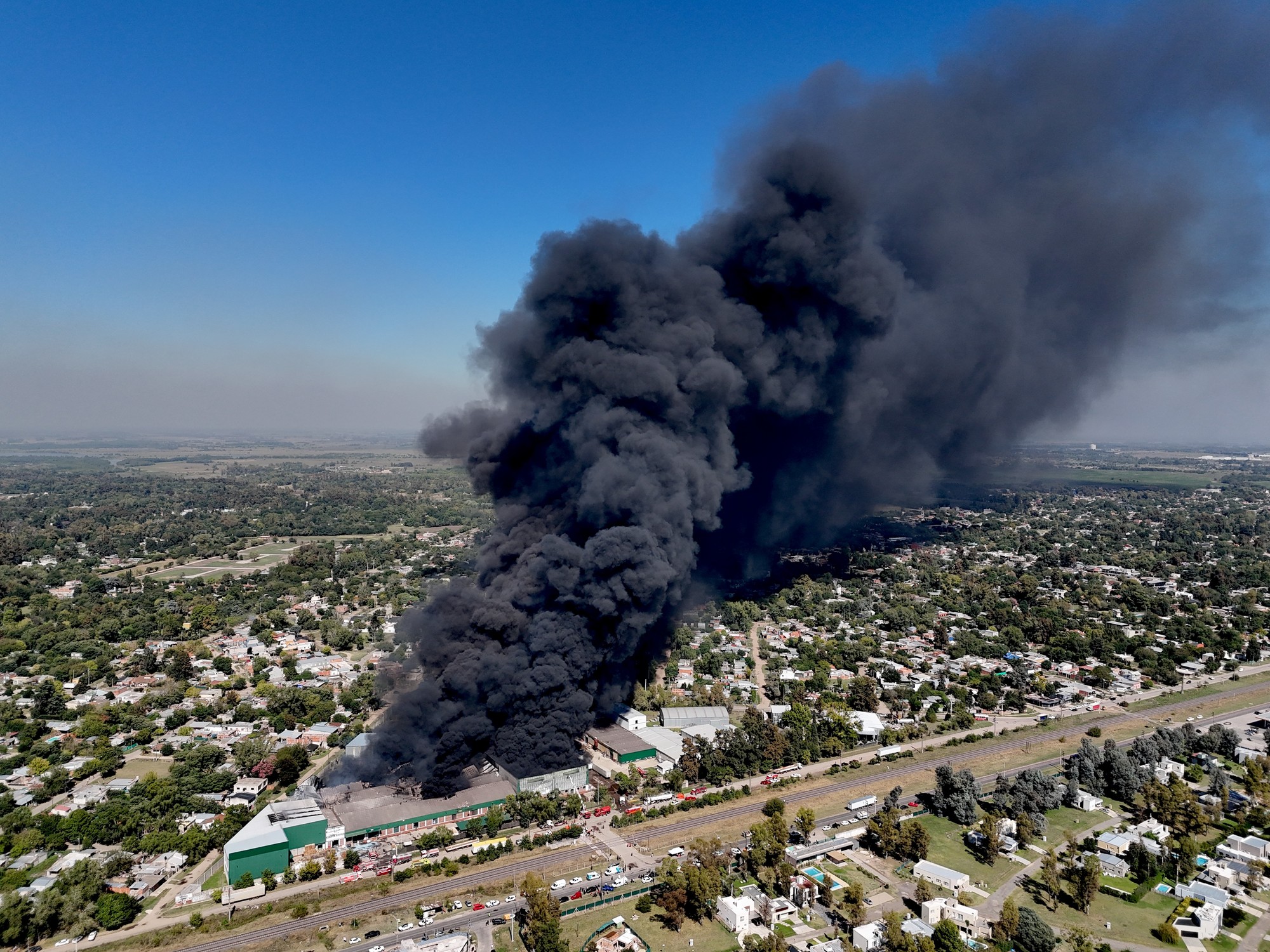
On a crisp Thursday morning in La Plata, Argentina, an unprecedented fire erupted at a paint depot in Francisco Álvarez, sending a towering column of black smoke visible for 30 kilometers. The incident, linked to the Fademac chemical plant, ignited panic across the community as over 100 residents were evacuated. What began as a local emergency quickly escalated into a critical test of urban resilience in a rapidly developing city.
María Juvenal, a local resident, reported the fire’s severity: 'The smoke column was so intense, it cast shadows on the sky for miles.' This wasn't just any fire—it was a warning sign of deeper systemic issues in industrial zones. The black smoke, composed of toxic chemicals from the paint depot, exposed a fragile infrastructure where emergency response systems struggled to keep pace with the scale of the disaster.
Why Did This Fire Happen?
The incident occurred at Fademac, a facility that has long been criticized for its hazardous storage practices. Local experts highlighted a critical gap between regulatory compliance and actual operational safety. In a city where industrial zones often operate in the shadows of rapid urbanization, this fire revealed the consequences of outdated safety protocols and inadequate monitoring.
- Over 100 residents evacuated due to toxic fumes spreading through the neighborhood
- Black smoke visible 30 km away indicated severe air quality degradation
- Local authorities declared the fire 'controlled' but warned of ongoing risks
Official communications from the municipal office emphasized immediate action: 'We are working to secure the area,' they stated in a social media post. Yet the phrase 'anarquía y falta de control'—'anarchy and lack of control'—used by experts in La Plata underscores a deeper crisis. This incident exposed not just an isolated failure but a systemic breakdown in how communities handle industrial hazards.
How Can Communities Prepare?
Experts from La Plata's emergency response team now advocate for proactive measures. Dr. Elena Rivas, a local environmental scientist, noted that the fire highlighted the need for real-time monitoring systems similar to those deployed in recent years. Drones and advanced camera networks have been deployed to track the fire’s progression, but these tools are often underfunded and lack integration with existing safety protocols.
The incident also revealed gaps in public awareness. Many residents in Francisco Álvarez are unfamiliar with the risks posed by industrial zones, a problem that has been exacerbated by the city’s rapid growth. As one resident put it, 'We thought it was just a small fire. Now we know it’s bigger than we imagined.'
For the future, this event serves as a reminder that effective disaster management requires more than just immediate response. It demands collaboration between local authorities, industries, and communities to build a system that anticipates risks before they escalate.