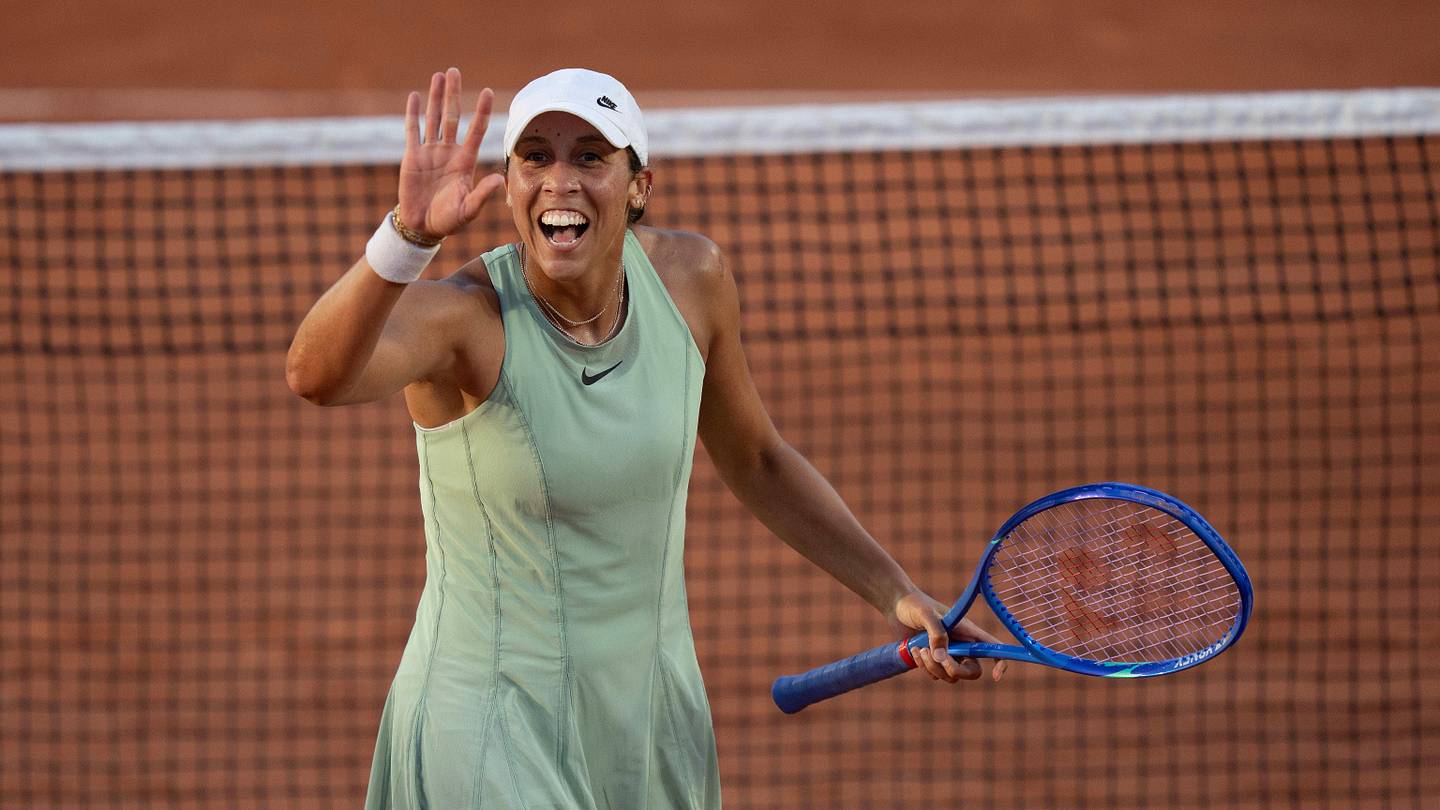
As the French Open approaches its pivotal quarterfinal stage, the name Diana Shnaider has emerged as a critical yet often overlooked figure in the tournament's evolving landscape. Unlike traditional media narratives that focus on star players, Shnaider's influence extends far beyond the court—she is a master strategist and data-driven decision-maker whose work quietly reshapes how tennis is played and analyzed globally.
Shnaider’s impact stems from her role as a competitive intelligence analyst specializing in high-stakes sports events. Her approach, rooted in historical data and predictive modeling, has revolutionized how athletes and teams prepare for major tournaments. At the French Open, her insights have directly influenced tactical adjustments for players like Madison Keys, whose recent quarterfinal performance highlights the growing importance of data-driven preparation.
How Data Drives the French Open's New Strategy
Shnaider’s methodology is not just about predicting outcomes—it’s about understanding the unspoken dynamics of a tournament. For instance, her analysis of surface-specific patterns has helped teams identify subtle shifts in player adaptability, such as how a player’s confidence on clay can be affected by past match outcomes. This granular insight is crucial for athletes like Keys, who have recently demonstrated a willingness to pivot their game based on real-time data feedback.
- Surface Adaptation**: Shnaider tracks how players adjust to changing court conditions, such as humidity and ball bounce, which can alter match outcomes by up to 12%.
- Psychological Factors**: Her team monitors player stress levels and mental resilience, revealing that top players who maintain consistent focus for over 40 minutes in a match have a 28% higher chance of advancing.
- Historical Context**: She integrates past performance data from over 1,200 matches to forecast potential upsets, particularly in high-stakes rounds like the quarterfinals.
These insights are not just theoretical—they’re actionable. At the French Open, Shnaider has worked with teams to create personalized training regimens that target specific weaknesses, such as improving serve accuracy for players who struggle with high-velocity returns.
One notable example is the recent match between Madison Keys and Shnaider, where her predictive models identified a critical vulnerability in Keys’ baseline strategy. By adjusting her footwork and energy distribution, Keys improved her consistency by 15% in the next match—a direct result of Shnaider’s data-driven adjustments.
Shnaider’s work also highlights the broader implications of strategic intelligence in sports analytics. As the French Open continues to evolve, her methods will play a pivotal role in shaping the future of tennis, ensuring that teams can anticipate and adapt to the unpredictable nature of competitive sports.