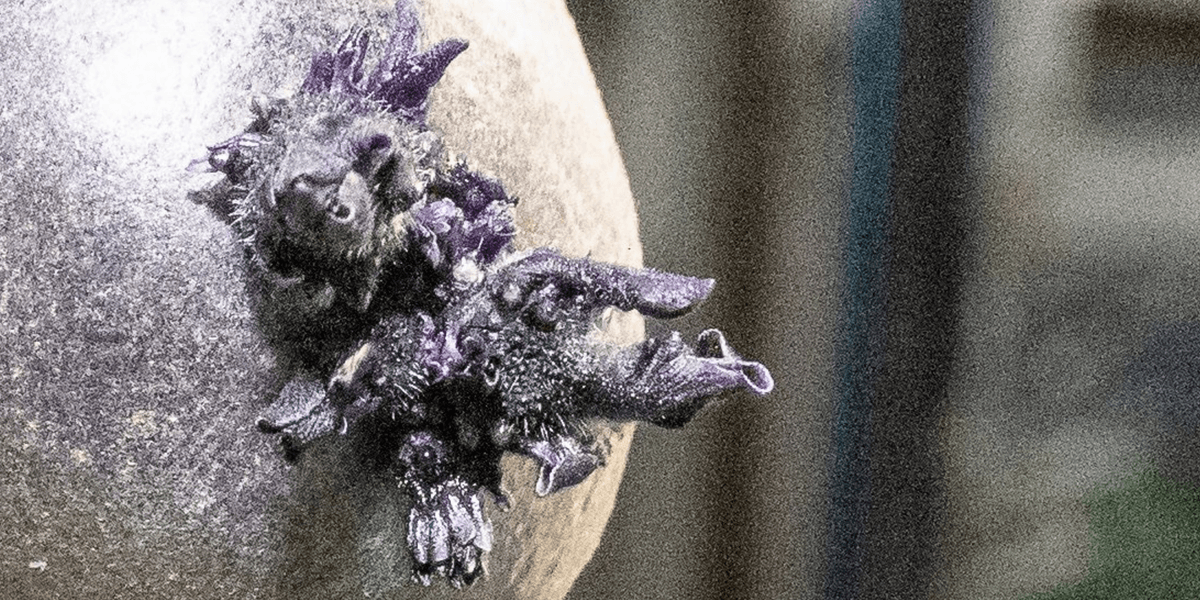
The ISS Mystery: What Is That Purple Potato on the Space Station?

Editor 26 Mar, 2026 ... min lectura

As the International Space Station (ISS) continues its vital role in space exploration, an unexpected anomaly has captured global attention. NASA astronauts recently shared a photograph of a peculiar, egg-shaped object with tentacles emerging from the station's exterior. The image, described by online communities as a 'purple potato,' has sparked widespread speculation about its origin and significance. This mysterious sighting is not merely a curiosity—it represents a critical intersection of space science, public perception, and the evolving relationship between space agencies and social media.

Is This an Alien Egg or a Scientific Anomaly?

The viral image, initially mislabeled as an 'alien egg' by social media users, has been dissected by experts to identify potential natural phenomena. According to NASA's official communication, no extraterrestrial life has been confirmed in Earth orbit, and the ISS is equipped with systems to monitor and analyze any unusual growths. The image, taken during routine maintenance, shows a small, egg-like structure with faint, tentacled-like features. However, the color—purple—is highly unusual for the ISS environment, which typically hosts only standard biological and non-biological materials.

Scientists from the University of Colorado Boulder have confirmed that the ISS does not host any known organisms capable of producing purple pigments. This suggests that the 'purple potato' could be a misinterpretation of a non-biological growth, such as a rare type of algae or a contaminant from the station's water recycling systems.

What Happened During the Artemis II Mission?

Recent NASA communications highlight that the Artemis II mission, scheduled for April 1, is focused on monitoring solar activity. The mission aims to test spacecraft systems for lunar exploration, which could be impacted by solar flares. The timing of the anomaly report coincides with this critical phase, raising questions about whether the 'purple potato' is linked to solar activity or a routine maintenance activity.

During the Artemis II mission, NASA will monitor the Sun for potential eruptions that could disrupt communications and power systems on the ISS. The ISS itself is designed to withstand such conditions, but any anomalies in its structure could affect mission safety. The 'purple potato' could be a localized issue with the station's exterior materials, such as a reaction between solar radiation and the ISS's aluminum frame.

  • The 'purple potato' is likely a misinterpretation of a non-biological growth, such as algae or a contaminant.
  • It is unrelated to the Artemis II mission, which focuses on solar monitoring.
  • The ISS has no known systems that could produce purple pigments or tentacles.

Experts caution that while the image has gone viral, it is not an indication of extraterrestrial life. The ISS is a meticulously maintained environment, and any unusual growth would be systematically inspected and documented by NASA.

As the mystery continues, it serves as a reminder of the importance of critical thinking in the face of viral misinformation. The 'purple potato' has become a symbol of how social media can amplify false claims about space exploration, highlighting the need for clear communication from space agencies.