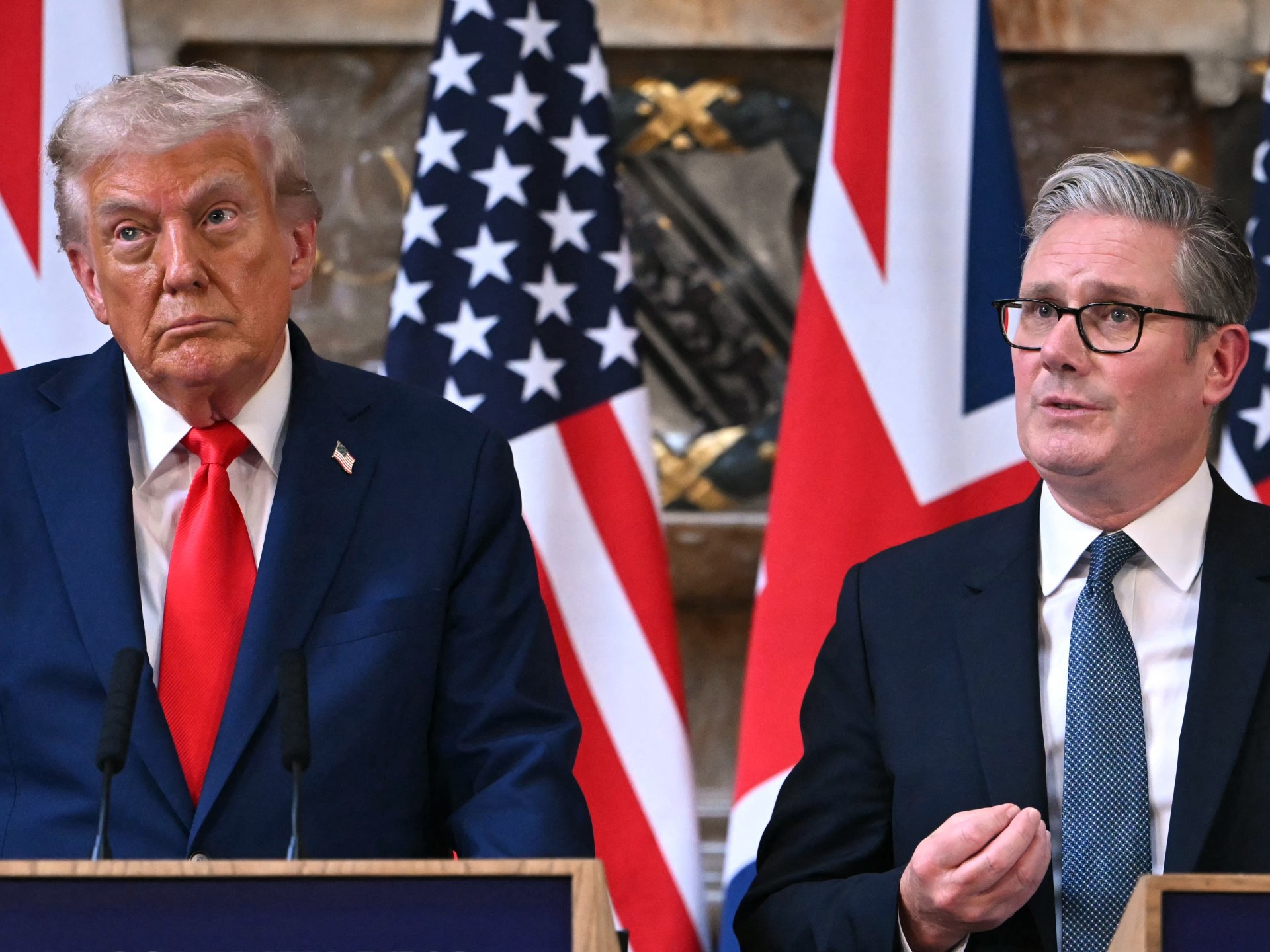
As the U.S. and UK governments navigate a delicate diplomatic landscape, tensions between President Donald Trump and British Prime Minister Keir Starmer have escalated to unprecedented levels, sparking a firestorm of criticism and speculation about the future of transatlantic relations. The recent exchange at Chequers, where Trump reportedly questioned the British leadership's response to the Iran conflict, has become a focal point for analysts and policymakers alike. This incident is not merely a fleeting moment of frustration but reflects deeper structural challenges in a once-cohesive alliance.
Analysts point to a series of missteps and miscommunications that have strained the relationship since Trump's return to the presidency. His tendency to dismiss diplomatic norms in favor of direct, often confrontational, communication has created a climate of uncertainty. For instance, during a recent meeting at Chequers, Trump's abrupt questioning of Starmer's stance on Iran has been interpreted as a lack of respect for established diplomatic protocols, potentially undermining trust in critical international negotiations.
The situation has drawn attention from global media outlets, with the New York Times highlighting the stark contrast between Trump's on-the-spot reactions and the formal diplomatic channels that have long defined U.S.-UK cooperation. This incident echoes historical precedents where direct, unfiltered communication from leaders has led to significant diplomatic fallout, such as the 1983 U.S.-U.K. nuclear crisis over the deployment of military assets in the North Atlantic.
How Does Trump's Behavior Reflect Broader Global Trends?
One critical question emerges: How does Trump's approach to international diplomacy align with the evolving global power dynamics of the 21st century?
Experts argue that Trump's style of governance, characterized by a focus on immediate results over long-term strategic planning, mirrors a broader shift in how leaders perceive international relations. This shift has been observed across multiple regions, from the Middle East to Europe, where leaders increasingly prioritize short-term political gains over sustained cooperation. For example, the recent Al Jazeera report on Trump sharing a Saturday Night Live UK skit mocking Starmer has intensified scrutiny on the compatibility of U.S. and UK approaches to international crises.
- Trump's dismissal of diplomatic norms could lead to further erosion of trust in critical international negotiations.
- Historical precedents, such as the 1983 U.S.-U.K. nuclear crisis, show how direct communication can escalate tensions.
- Trump's use of humor and satire in high-stakes diplomatic settings risks undermining the gravity of serious international issues.
The USA Today report on the Saturday Night Live UK episode, which features a satirical take on Trump's interactions with Prince Andrew, underscores the growing concern over the role of media in shaping perceptions of global leadership. This episode has drawn attention to the potential consequences of a leader who views international relations through a lens of entertainment and personal drama rather than strategic foresight.
As the world continues to grapple with complex geopolitical challenges, the implications of this incident go beyond a single diplomatic misstep. The fallout from Trump's comments and actions could have far-reaching consequences for the stability of transatlantic partnerships and global security frameworks.