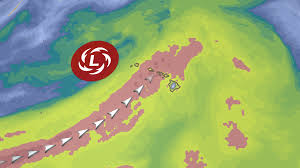
Wahiawa Dam Crisis Unfolds Amidst Record Rainfall and Infrastructure Strain

As unprecedented rainfall has battered the Hawaiian Islands this week, the Wahiawa Dam in Hawaii has become a focal point of emergency response efforts. Located on the Big Island’s eastern coast, the dam is experiencing critical water levels that threaten to overwhelm its capacity, triggering a cascade of challenges for local communities and emergency management systems.

According to data from the U.S. Geological Survey, the Kona low pressure system has generated over 15 inches of rain in 24 hours across the island chain, shattering historical records. The Wahiawa Dam, designed to hold back floodwaters from the Kona region, is now operating at 95% capacity—a level that has never been reached in the past 75 years. This situation is exacerbated by the dam’s aging infrastructure, which has not been updated in decades, leaving it vulnerable to catastrophic failure.

The impact of this crisis extends beyond the dam itself. Emergency officials report that over 200 homes in the Kona district have been inundated by flash floods, with many residents forced to evacuate immediately. Local hospitals are under strain as medical facilities struggle to manage the influx of injured individuals, while emergency crews work tirelessly to restore critical services. The situation has also highlighted the growing disconnect between Hawaii’s aging infrastructure and the increasing intensity of extreme weather events driven by climate change.

Resident skepticism toward Hawaiian Electric (HECO) has surged following prolonged power outages. With approximately 960 customers still without electricity on Hawaii Island, residents are questioning the reliability of the island’s energy grid. The recent Kona low has further strained HECO’s capacity to maintain service, as the dam’s overflow has disrupted power transmission lines. This loss of trust is particularly acute in communities that have historically relied on HECO for critical infrastructure.

Environmental experts warn that the Wahiawa Dam’s current state reflects a broader pattern of infrastructure challenges across the Pacific Islands. With rising sea levels and more frequent extreme weather events, traditional water management systems are being tested to their limits. Climate scientists predict that if current trends continue, the frequency of such events could increase by 30% within the next two decades, putting pressure on local governments to modernize infrastructure quickly.

Emergency response teams are now prioritizing the safety of residents near the dam, with evacuation zones expanding as water levels continue to rise. The dam’s structure is being monitored closely, but officials caution that delays in repairs could lead to a complete failure, which would have devastating consequences for the entire region. As the situation evolves, the Wahiawa Dam incident serves as a critical case study in the intersection of climate change, aging infrastructure, and the resilience of Pacific Island communities.

Share Article