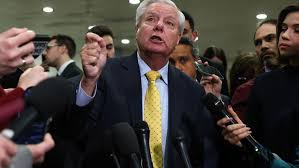
Lindsey Graham Urges South Carolina to Deploy 'Sons and Daughters' to Middle East Amid Iran Conflict

Editor 12 Mar, 2026 ... min lectura

Lindsey Graham, a prominent Republican senator known for his foreign policy expertise, has sparked controversy by suggesting that South Carolina should send its 'sons and daughters' to the Middle East. This statement, shared on social media, has ignited debates about U.S. foreign policy and regional security. Graham's remarks come amid heightened tensions between Iran and the United States, particularly following recent diplomatic maneuvers involving Saudi Arabia and Israel.

Graham's comments reference a recent conversation with Saudi Arabia regarding its stance on military action against Iran. According to his social media post, Saudi Arabia has refused to use force against Iran, which he claims is a critical factor in shaping U.S. strategy. The senator has framed this issue as an opportunity for South Carolina to contribute to regional stability through diplomatic engagement and military deployment. His proposal suggests a shift in how the state approaches international conflicts, emphasizing the role of its youth in addressing complex geopolitical challenges.

The statement has drawn mixed reactions from political figures and analysts. Critics argue that such a call to action could be perceived as dismissive of the complexities of modern warfare and the risks involved in deploying young individuals to volatile regions. Proponents, however, highlight the potential for grassroots involvement in peace initiatives and the importance of local engagement in international affairs. Graham's focus on sending South Carolina's youth to the Middle East reflects a broader strategy of leveraging state-level resources to influence global outcomes.

Graham has been a vocal advocate for a more assertive approach to foreign policy, particularly in relation to Iran. His recent interactions with Israeli officials, including Prime Minister Benjamin Netanyahu, have raised questions about his role in shaping diplomatic efforts. The Wall Street Journal reports that Graham has been 'coaching' Netanyahu on strategies to address the Iran conflict, suggesting a hands-on approach to conflict resolution that prioritizes direct engagement over diplomatic isolation.

Analysts have noted that Graham's comments align with a growing trend of politicians using state-level initiatives to drive national policy. By framing the Middle East conflict through the lens of South Carolina's contributions, he aims to position the state as a proactive player in international diplomacy. This strategy could have significant implications for how regional conflicts are managed and how future U.S. policy is shaped.

While Graham's proposal has been met with skepticism, it highlights the evolving dynamics of U.S. foreign policy and the increasing role of state-level actors in shaping national strategies. His emphasis on youth engagement and regional stability underscores a broader debate about the intersection of domestic and international interests in contemporary geopolitics.