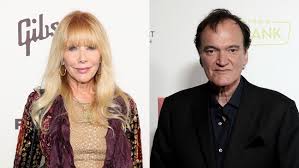
Rosanna Arquette, the acclaimed actress best known for her role as the girlfriend of drug dealer Lance in Quentin Tarantino’s Pulp Fiction, has publicly criticized the director’s repeated use of the N-word in his filmography. Speaking during a recent interview with The Times U.K., Arquette described Tarantino’s practice as 'racist' and 'creepy,' emphasizing the harmful impact of the slur on marginalized communities. The actress, who has been a vocal advocate for social justice and racial equality, argued that the N-word’s inclusion in Tarantino’s work—despite its iconic status—has become a problematic pattern that undermines the integrity of his storytelling.
Arquette’s remarks come amid growing scrutiny over Tarantino’s use of racial slurs in his films, particularly Pulp Fiction and Once Upon a Time in Hollywood. She highlighted that while Tarantino’s films have been celebrated for their bold narrative choices and innovative storytelling, the repeated use of the N-word has been normalized within his cinematic language. 'It’s iconic, a great film on a lot of le...' she explained, noting that this normalization has led to a troubling shift in how the word is perceived in mainstream cinema. The actress stressed that the N-word, when used without context or sensitivity, perpetuates harmful stereotypes and reinforces systemic racism.
Arquette’s comments align with broader conversations about language, representation, and the ethical responsibilities of filmmakers. She pointed out that the N-word’s inclusion in Tarantino’s films, while sometimes framed as 'creative' or 'stylistic,' has become a tool that can alienate audiences and critics alike. 'It’s not about the film’s quality,' she added, 'but the impact it has on people who are affected by the language.' The actress, known for her advocacy work with organizations focused on racial justice, has called for a more nuanced approach to language in film that respects the dignity of all communities.
While Tarantino has been praised for his unique style and ability to push boundaries, Arquette’s critique underscores the importance of contextualizing language within the broader social landscape. She emphasized that the N-word’s use in his films has become a recurring issue that needs to be addressed through dialogue and education. 'I’ve seen how this language affects people who are marginalized,' she said, 'and it’s not something we can ignore.' Her comments reflect a growing movement among actors and filmmakers to rethink the use of racial slurs in entertainment, particularly when they carry negative connotations and historical weight.
Arquette’s critique has sparked a wider discussion about the role of language in cinema and the ethical implications of using racial slurs in film. She has been vocal about the need for filmmakers to consider the impact of their language on audiences, especially when it comes to sensitive topics like race and racism. While acknowledging Tarantino’s contributions to the industry, she has called for a more thoughtful and respectful approach to language that avoids perpetuating harm.