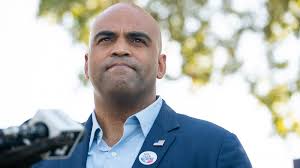
Colin Allred, the incumbent U.S. congressman representing Texas's 18th congressional district, has launched a high-stakes primary challenge against fellow Democrat Julie Johnson in a fiercely contested Texas House race. This development marks a dramatic reversal from their previous political alignment, where Allred had once endorsed Johnson to fill a key congressional seat. The race, now centered around a redrawn district map that reshapes political dynamics in the Dallas-Fort Worth region, highlights the volatile nature of Texas electoral politics and the complexities of modern coalition-building.
The district redrawing process, which has been a contentious issue in state and federal elections, has forced two Democratic candidates—Allred and Johnson—to compete directly against each other. This unexpected shift has been attributed to a series of policy disagreements and strategic missteps that have left both candidates in a precarious position. The race is not only about the immediate election but also about the broader implications for Democratic representation in a traditionally Republican-leaning state like Texas.
Analysts note that the district reconfiguration, which was initially designed to address demographic shifts and ensure fairer representation, has inadvertently created a competitive environment where previously aligned candidates now find themselves on opposing sides. The tension between Allred and Johnson, once seen as political allies, has become a focal point for understanding the challenges faced by Democrats in securing a foothold in a state that has historically favored conservative policies and candidates.
Allred's decision to seek re-election in the House primary after initially endorsing Johnson for a Senate seat has raised questions about his strategic priorities. The race now focuses on the economic implications of the district boundaries, particularly how stock market volatility and regional economic policies have influenced voter behavior. This issue has become central to the primary campaign, reflecting the growing importance of financial and economic issues in local and national politics.
The implications of this primary contest extend beyond Texas. It underscores the need for more nuanced approaches to district redistricting and the potential consequences of political realignments in a state that has seen significant shifts in voter demographics. The outcome of this race could set a precedent for how future redistricting efforts are handled, especially in regions where economic and political interests collide.
As the primary results continue to unfold, observers are watching closely to see how this race could influence broader Democratic strategies in the state. The competition between Allred and Johnson highlights the challenges of maintaining political alliances in a rapidly changing political landscape, where the stakes are not just about winning but about shaping the future of representation in a state that has long been dominated by conservative forces.