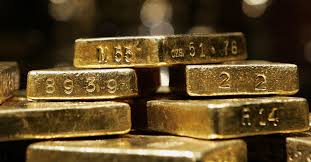
Global gold prices reached a significant milestone on Monday, climbing to $5,400 per ounce as investors reacted to escalating geopolitical tensions in the Middle East. The surge was driven by heightened safe-haven demand, with traders and financial institutions seeking refuge from volatile markets amid fears of prolonged conflict. This development marks a critical juncture for the precious metal, reflecting broader shifts in global economic sentiment and risk appetite.
Analysts highlighted the role of the Middle East conflict in accelerating the price movement. The recent escalation in hostilities between regional powers has triggered widespread uncertainty, prompting investors to flock to gold as a reliable store of value. This trend is particularly pronounced in markets with high exposure to geopolitical risks, where gold's historical role as a safe-haven asset has become increasingly relevant. The spike in demand has pushed gold futures to unprecedented levels, with prices fluctuating by as much as 4.6 percent within a single trading session.
The impact of the Middle East crisis on gold prices has been profound, with financial markets showing significant volatility. Gold futures (GC=F) and other related indices, such as the Philadelphia Federal Fund (PL=F) and the Chicago Board of Trade (PA=F), experienced sharp declines of 12.23 percent and 8.57 percent, respectively. This divergence underscores the complex interplay between geopolitical events and market dynamics, highlighting how localized conflicts can ripple across global financial systems.
Investors are increasingly turning to gold as a strategic hedge against economic instability. The safe-haven demand has not only driven immediate price increases but also reinforced gold's position as a critical component of diversified investment portfolios. With central banks globally increasing their gold reserves, the long-term implications for the precious metal's value are expected to be substantial. The current price surge reflects confidence in gold's ability to weather uncertain times, a characteristic that has historically been a key factor in its appeal during periods of global volatility.
Financial institutions and individual investors are now monitoring the situation closely, with many anticipating further price movements as the conflict continues to unfold. The Middle East crisis has created a unique market environment where traditional risk metrics no longer fully capture the impact of geopolitical events. As the price of gold approaches $5,400, the market is poised for continued fluctuations, with traders balancing short-term gains against potential long-term volatility.
The broader implications of this trend extend beyond immediate price movements. The surge in gold prices could signal a shift in global investment strategies, with more institutions allocating capital to gold as a diversified hedge. Additionally, the increased demand from central banks and institutional investors is likely to further drive prices upward, creating a feedback loop that could sustain elevated levels in the near term. This development also highlights the growing importance of safe-haven assets in times of uncertainty, a trend that has been observed throughout history.
As the conflict in the Middle East persists, the market's reaction to gold prices will likely continue to evolve. Traders and investors are advised to monitor the situation closely, as the interplay between geopolitical events and financial markets remains a critical factor in determining the trajectory of gold prices. The current price surge reflects a complex and dynamic market environment, where the demand for safe-haven assets is increasingly critical to understanding the broader economic landscape.