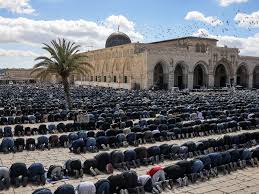
On the second Friday of Ramadan in 2026, approximately 100,000 Palestinian worshippers gathered at the Al-Aqsa Mosque compound in the Old City of Jerusalem, despite Israeli authorities imposing significant restrictions on access to the holy site. The event, which took place on February 27, 2026, highlighted the ongoing tensions between Palestinian communities and Israeli security measures surrounding religious observances in occupied East Jerusalem.
Worshippers traveled through the Qalandiya checkpoint in the occupied West Bank, north of Jerusalem, undergoing rigorous security screenings before reaching the Al-Aqsa Mosque compound. This process, while necessary for safety, has been criticized by human rights organizations as a measure that disproportionately affects Palestinian access to religious sites. The scale of the gathering underscores the deepening challenges faced by Palestinians in exercising their right to pray at a site that holds immense religious significance for Muslims worldwide.
Al Jazeera’s investigation revealed that the restrictions on access to Al-Aqsa Mosque, a key site for Muslim prayers in Jerusalem, have become increasingly stringent over the past decade. These measures, often justified by Israeli authorities as necessary for public safety, have led to prolonged delays and complex bureaucratic procedures that hinder religious freedom and community cohesion. The situation reflects broader patterns of control and exclusion that have intensified since the 2019 expansion of Israeli settlements in East Jerusalem.
Human rights groups have raised concerns that the restrictions on prayer at Al-Aqsa have been part of a larger strategy to limit Palestinian movement and influence religious activities in Jerusalem. The second Friday of Ramadan, known as the 'Friday of the Filling of the Holy Month,' is a critical time when many Muslims gather to pray, making it a particularly sensitive period for religious observances in the region.
Efforts to improve access to religious sites have been met with resistance from Israeli security services, who cite security risks posed by Palestinian religious gatherings. This tension has not only affected prayer at Al-Aqsa but has also spilled over into other areas, such as the West Bank, where communities often face similar barriers to religious expression.
Analysts suggest that the restrictions on prayer at Al-Aqsa reflect a broader pattern of Israeli policies that have been criticized for undermining the religious freedom of Palestinians. The ability to pray at the Al-Aqsa Mosque is not only a matter of religious practice but also a symbol of political and cultural identity for many Palestinians.
The incident has sparked discussions about the future of religious freedom in Jerusalem, with many calling for a more balanced approach to security and religious expression. As the holy month of Ramadan continues, the situation remains fragile, and further restrictions could have serious implications for Palestinian communities and their ability to practice their faith.