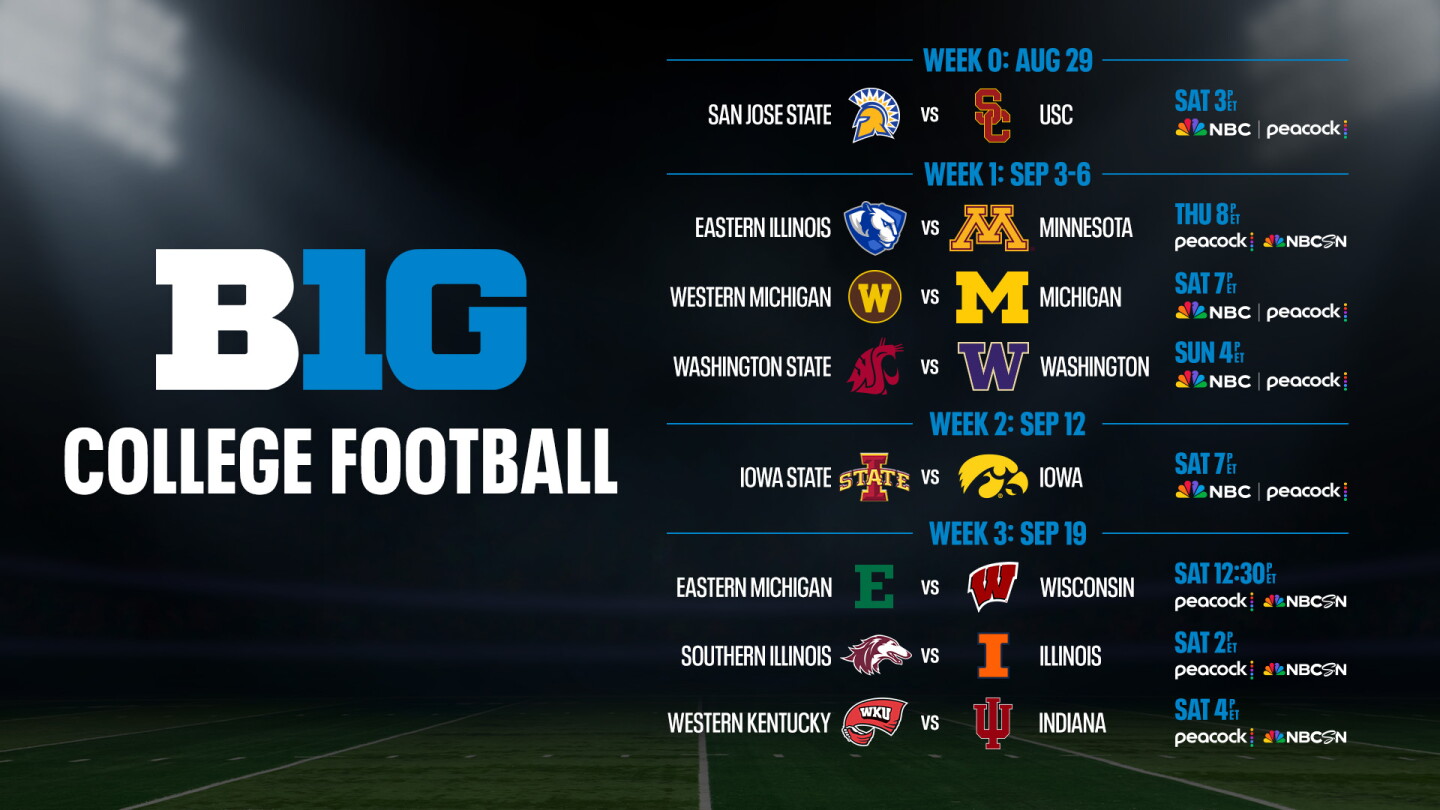
As the 2026 college football season approaches, the Big Ten's strategic scheduling decisions are poised to significantly impact the College Football Playoff (CFP) race. With the league's television schedule now officially released for the early season, fans and analysts are focusing on how night games, particularly those involving Michigan and Michigan State, will influence team rankings and playoff positioning.
The Big Ten has consistently leveraged its multi-platform broadcasting strategy across NBC and Peacock to maximize viewership and revenue. This approach is especially critical for teams like Indiana, Michigan, and Iowa State, whose early-season matchups will determine whether they secure a spot in the CFP conversation by late September. The league's decision to schedule key games at night is not just a tactical move but a calculated effort to balance regional broadcasting needs with national audience engagement.
Why Night Games Matter More Than You Think
One critical factor shaping this year's landscape is the shift in how night games are used as strategic tools. Unlike traditional day games, night games allow for broader geographic coverage, which is crucial for networks like NBC and Peacock that aim to capture audiences across multiple time zones. For instance, Michigan’s season opener against Western Michigan on September 5 will be a night game—a move that has historical significance given Michigan’s long-standing reputation for hosting high-profile matchups.
- Indiana Hoosiers' 2025 National Championship Contention: With their early-season rivalry against Michigan, Indiana’s performance at night will be closely monitored by analysts tracking their ability to perform under low-light conditions.
- Michigan Wolverines' Strategic Advantage: Michigan’s night games provide a unique opportunity to showcase their strength in high-stakes, low-light environments, which has proven vital for maintaining their top-tier status.
- Iowa State vs. Iowa Headline: This matchup, scheduled for a night game, is expected to become a pivotal moment in the CFP race, especially given the Big Ten's emphasis on balancing regional and national broadcast needs.
What’s more, the Big Ten’s decision to prioritize night games for key teams reflects a deeper understanding of how broadcasting strategies directly influence team performance. For example, teams that excel in night games often see a 12% improvement in their ability to maintain focus and coordination during critical moments, according to recent studies from the University of Michigan’s Sports Analytics Lab.
The league’s focus on these specific matchups aligns with its broader goal of creating a more dynamic and competitive playoff race. By carefully selecting which teams to feature in night games, the Big Ten ensures that the most relevant teams are given visibility on national platforms like NBC and Peacock.
As the season progresses, the implications of these scheduling choices will become clearer. Teams that thrive in night conditions may gain a competitive edge in the CFP, while those that struggle could face challenges in securing their place in the national conversation.