Italy Aviation Workers Prepare for Second Wave of Strikes in February and March

Editor 24 Feb, 2026 ... min lectura

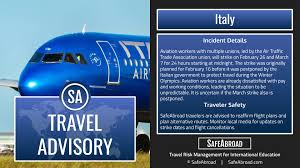
Italian aviation workers, organized under the Air Traffic Trade Association, are preparing for a significant strike action that will disrupt air travel across the country. The strike, originally planned for February 16, has been postponed by the Italian government to February 26 and March 7, with both strikes lasting 24 hours starting at midnight. This decision comes as part of a broader effort to protect travel during the Winter Olympics.

The strike action involves multiple unions, including the Air Traffic Trade Association, which represents a large portion of the aviation workforce in Italy. Workers are expressing dissatisfaction with ongoing pay disputes and worsening working conditions, particularly in high-stress environments such as air traffic control and flight operations. These conditions have led to increased tensions between the workforce and management, with the government stepping in to mediate the situation.

Travelers planning to visit Italy should be aware that flight cancellations and delays are expected during the strike periods. SafeAbroad, a travel advisory service, has issued warnings advising travelers to reaffirm their flight plans and consider alternative routes to avoid potential disruptions. The government's decision to postpone the strikes to protect travel during the Winter Olympics highlights the complex interplay between labor rights and international events.

Despite the uncertainty surrounding the March 7 strike, the Italian government has not confirmed whether this second wave will be affected by further postponements. This unpredictability adds to the challenges faced by both workers and travelers, as the strike action is expected to cause widespread disruption to air travel networks across the country.

The strike is part of a larger pattern of labor unrest in the Italian aviation sector, which has been exacerbated by years of stagnant wages and increasing operational demands. While the government has been proactive in managing the situation, the effectiveness of these measures remains to be seen.

The incident has significant implications for the tourism industry, which relies heavily on seamless air travel to and from Italy. Airlines and tour operators are scrambling to adjust their schedules and provide alternative transportation options for affected travelers.

As the strike approaches, there is a growing concern among industry stakeholders about the potential for extended disruptions. The government's intervention to protect travel during the Winter Olympics may not be sufficient to address the underlying issues driving the strike action.

Travelers should monitor local media and travel advisories for real-time updates on strike status and potential travel disruptions. It is crucial for individuals planning to travel to Italy to be prepared for possible changes in their travel plans.