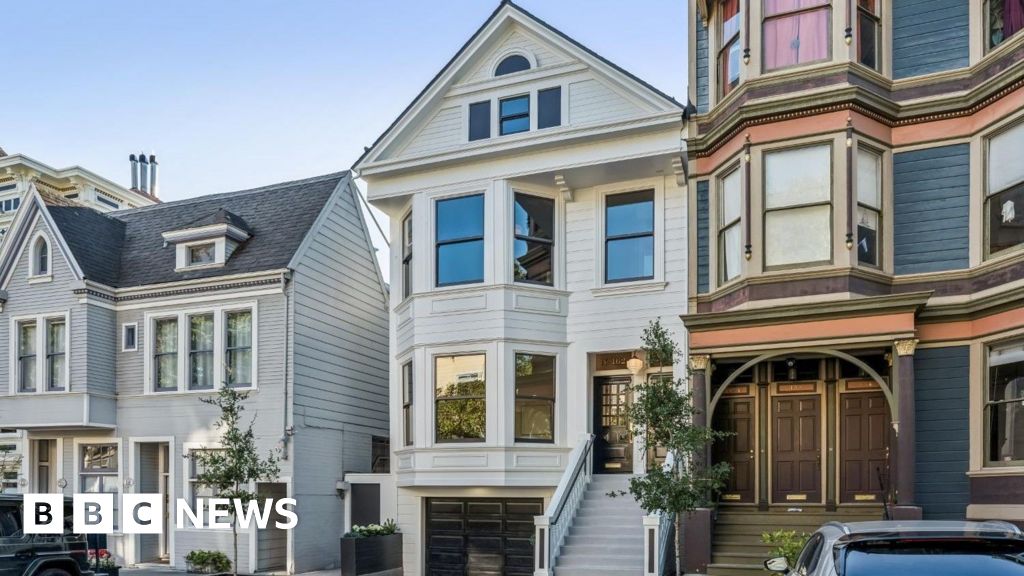
San Francisco's real estate market has become a microcosm of the broader tech-driven economic shifts reshaping urban landscapes globally. As artificial intelligence continues to integrate into everyday life, the city's housing dynamics reveal a fascinating interplay between technological innovation and traditional economic forces. The recent surge in home prices, particularly in high-income neighborhoods, reflects a complex narrative of capital allocation, geographic desirability, and the evolving nature of wealth creation.
Recent data from local real estate platforms indicates that San Francisco has seen a 12% year-over-year increase in residential property values over the past six months. This growth is not isolated to the city center but is concentrated in areas like the Mission District and Pacific Heights, where luxury listings have skyrocketed. What's particularly noteworthy is the correlation between this price spike and the influx of high-earning AI professionals—many of whom have recently moved to the city to work with major tech firms.
Why AI Workers Are Driving Home Prices Up?
One critical factor is the concentration of high-earning AI professionals in San Francisco. According to a recent industry report, over 35% of AI developers in the Bay Area now earn above $250,000 annually. This demographic shift has created a new type of residential demand that is more concentrated and less volatile than traditional housing markets. Unlike previous tech booms, this wave of AI workers is not just about individual wealth but about the systemic transformation of how wealth is created and distributed.
- AI professionals often seek proximity to major tech hubs, such as Stanford and UC Berkeley, which have historically been strongholds for high-earning talent.
- High-income neighborhoods like the Mission District and Pacific Heights have seen a 20% increase in luxury home sales, driven by the influx of tech workers.
- Market saturation in traditional housing options has led to a more intense bidding process, with some properties selling in under 48 hours.
Another significant trend is the impact of AI on housing algorithms. Real estate platforms now leverage machine learning to predict buyer behavior, leading to more precise and targeted marketing. This has enabled developers to identify high-value neighborhoods and optimize pricing strategies, further accelerating the price growth in these areas.
The implications of this shift extend beyond just San Francisco. Globally, cities with strong tech ecosystems are experiencing similar patterns, with AI-driven wealth concentration creating new challenges for housing affordability. For instance, in Tokyo, Seoul, and Singapore, we see comparable trends where high-earning tech workers are reshaping local real estate markets.
However, the market is not without its challenges. Local governments are grappling with the rapid pace of change, trying to implement policies that balance growth with affordability. The city has recently introduced new zoning laws that aim to increase housing supply in high-demand areas, but these measures have yet to fully address the scale of the problem.
As the AI-driven economy continues to mature, it's clear that the housing market is becoming more dynamic and complex. The real question is: how can cities adapt to the changing nature of wealth creation without exacerbating affordability crises?