The Lincoln Memorial Reflecting Pool: A Project That’s More Than Just a Paint Job

Editor 05 Jun, 2026 ... min lectura

The Lincoln Memorial Reflecting Pool, a defining feature of the National Mall in Washington, D.C., has been the center of controversy and speculation since President Trump’s recent announcement to reseal and add a blue-tinted coating to the pool. This initiative, framed as a simple 'paint job,' has sparked widespread debate about its true scope and implications for the nation’s capital.

Is the Pool Really Going to Reflect Again?

As reported by USA TODAY NETWORK on June 5, 2026, the project has raised questions about the pool’s functionality. The pool, originally designed to mirror the Lincoln Memorial and its surroundings, has been plagued by issues with water clarity and maintenance over the years. Trump’s team claims the work will restore the pool’s reflective properties, but critics argue the project is more complex than a mere surface-level update.

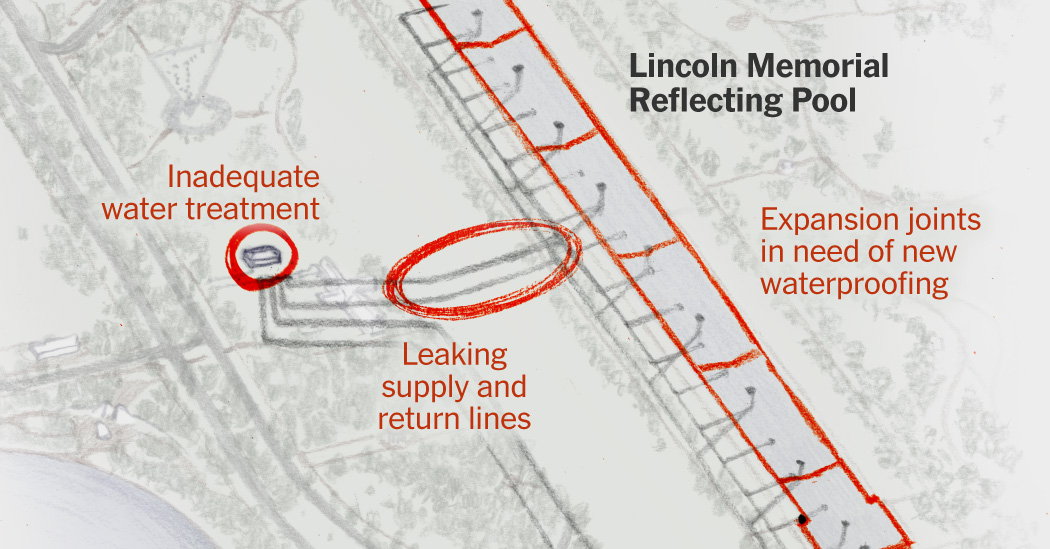
Historically, the pool has been a symbol of the nation’s commitment to public spaces and historical preservation. However, its current state reflects deeper challenges in maintaining federal infrastructure. The pool’s design, which relies on precise water chemistry and minimal surface disturbance, has been affected by decades of neglect and environmental factors like pollution and temperature fluctuations.

  • The original pool, completed in 1924, was designed to reflect the Lincoln Memorial’s intricate architecture.
  • Over time, the pool has experienced reduced clarity due to algae growth and mineral deposits.
  • Trump’s proposal includes a new blue-tinted coating to improve visibility and aesthetics, but this could disrupt the pool’s natural water clarity.

While the project has drawn attention for its potential to enhance the pool’s visual appeal, critics warn that the blue tint could compromise the pool’s ability to reflect the surrounding landscape accurately. The pool’s reflective quality depends on clear, calm water and minimal surface ripples—a standard that has been difficult to maintain in urban environments with high levels of pollution and traffic.

Experts in landscape architecture and historical preservation emphasize the importance of balancing modernization with historical integrity. The pool’s role as a symbol of national identity and civic pride means any changes must be carefully considered to preserve its original purpose and functionality.

As the project progresses, stakeholders must weigh the benefits of improved aesthetics against the risks of altering the pool’s reflective properties. The outcome will have implications not just for the pool itself but for how public spaces are managed and maintained in the future.