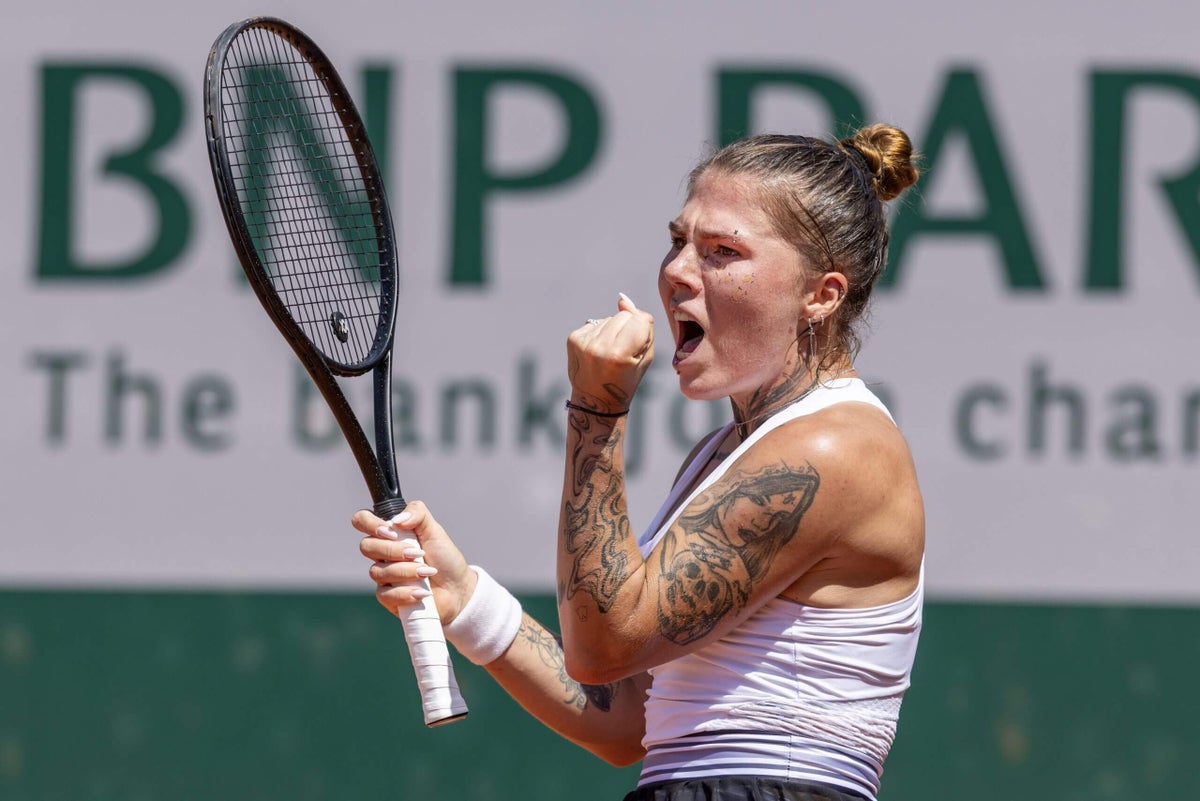
In the heart of Paris, where the echoes of historic Grand Slam triumphs mingle with the present-day struggles of global conflicts, Oleksandra Oliynykova has emerged as a pivotal figure in both tennis and humanitarian advocacy. A Ukrainian-born tennis player competing in the French Open, Oliynykova’s journey has transcended the traditional boundaries of sports and politics, becoming a symbol of resilience and unwavering commitment to her homeland.
As the world No. 65 tennis player, Oliynykova has consistently woven her advocacy for Ukraine into her public persona, refusing to compartmentalize her athletic achievements with her humanitarian efforts. Her statement at the French Open, which highlighted the destruction of Ukrainian tennis courts, underscores her dual role as a competitor and a voice for her nation’s resilience. This approach has not only earned her international recognition but also positioned her as a role model for athletes navigating the complex interplay between sports and geopolitics.
Can a Tennis Player’s Advocacy Truly Impact Global Sports Narratives?
Oliynykova’s refusal to separate her Grand Slam success from her advocacy for Ukraine challenges the conventional narrative that athletes can remain neutral in times of crisis. By using her platform to highlight the devastation of Ukrainian infrastructure—such as the damaged tennis courts she has witnessed—she has transformed her personal story into a broader geopolitical story. Her actions demonstrate how individual voices, even within the most elite sports environments, can amplify critical humanitarian messages.
- Her first-round press conference at the French Open revealed her focus on the destruction of Ukrainian tennis facilities.
- She has consistently linked her performance on the court to her commitment to supporting Ukrainian causes.
- Her advocacy has drawn attention to the intersection of sports and international conflicts.
Unlike many athletes who shy away from political implications, Oliynykova has embraced her role as a conduit for awareness. This strategy has attracted a dedicated following, with fans and media alike recognizing her authenticity in translating personal experience into global advocacy.
Through her actions, Oliynykova has become a living example of how sports can serve as a catalyst for change. Her presence at the French Open, a tournament historically associated with neutrality and global unity, has become a stage for more than just athletic competition—it has become a platform for highlighting the human cost of conflict.
As the tournament unfolds, Oliynykova’s commitment to her cause remains undimmed. Her message is clear: the pursuit of excellence in sports cannot exist in isolation from the broader context of global solidarity and human rights. In a world where the lines between sport and politics are increasingly blurred, she stands as a testament to the power of individual action in the face of adversity.