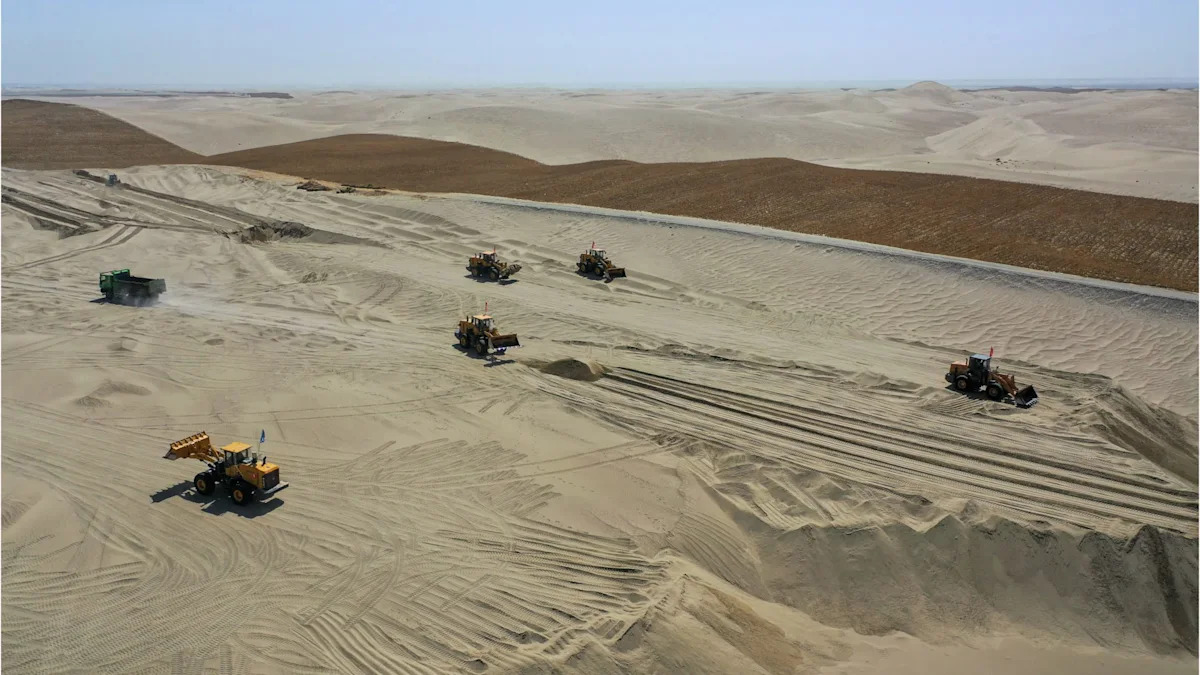
Recent satellite imagery has revealed an unprecedented scale of activity in China's Xinjiang region, particularly around the Lop Nur desert. These developments are part of a broader strategic effort to bolster China's nuclear deterrence capabilities. The focus on remote desert locations, away from potential interference and strategic threats, underscores the country's commitment to maintaining a robust and resilient nuclear arsenal.
China's strategic move to expand its missile infrastructure in Xinjiang is not merely a tactical adjustment but a response to evolving geopolitical dynamics. The Lop Nur region, historically known for its vast desert landscapes and strategic remoteness, has become a critical hub for China's strategic nuclear forces. This location choice is deliberate, allowing for effective missile deployment and rapid response capabilities while minimizing the risk of external interference.
Is China's Xinjiang expansion a direct response to regional instability?
The recent activity in Xinjiang is closely linked to the broader geopolitical tensions involving Taiwan and the potential for an Iran conflict. These factors have intensified the strategic imperative for China to secure its nuclear assets in a geographically isolated location. The expansion of missile launch pads and support infrastructure near existing silos indicates a proactive approach to managing potential regional crises and ensuring operational continuity.
China's nuclear missile program, particularly the DF-41, has become a focal point in global strategic discussions. The DF-41 is a long-range ballistic missile capable of carrying both conventional and nuclear warheads, with a range extending up to 15,000 kilometers. Its deployment in the Xinjiang region is significant because it allows for rapid response capabilities and enhanced deterrence against potential adversaries, especially the United States and its allies.
China's military strategy has increasingly emphasized the integration of nuclear deterrence with conventional military capabilities. The expansion of missile infrastructure in Xinjiang is part of a larger effort to create a multi-layered defense system that includes both defensive and offensive capabilities. This integration ensures that China can project power and respond to threats across multiple domains.
- Defensive networks around nuclear missile silos are critical for protecting strategic assets from potential attacks.
- DF-41 missile capabilities represent a significant leap in China's strategic deterrence, with a range that can reach targets across multiple continents.
- Lop Nur region is chosen for its vast, remote desert terrain, which minimizes the risk of detection and interference.
The implications of this infrastructure expansion are profound. As China continues to enhance its nuclear capabilities, the global strategic balance is shifting. The development of these facilities in Xinjiang demonstrates a clear commitment to maintaining a credible and robust nuclear deterrent, which is essential for national security and regional stability.