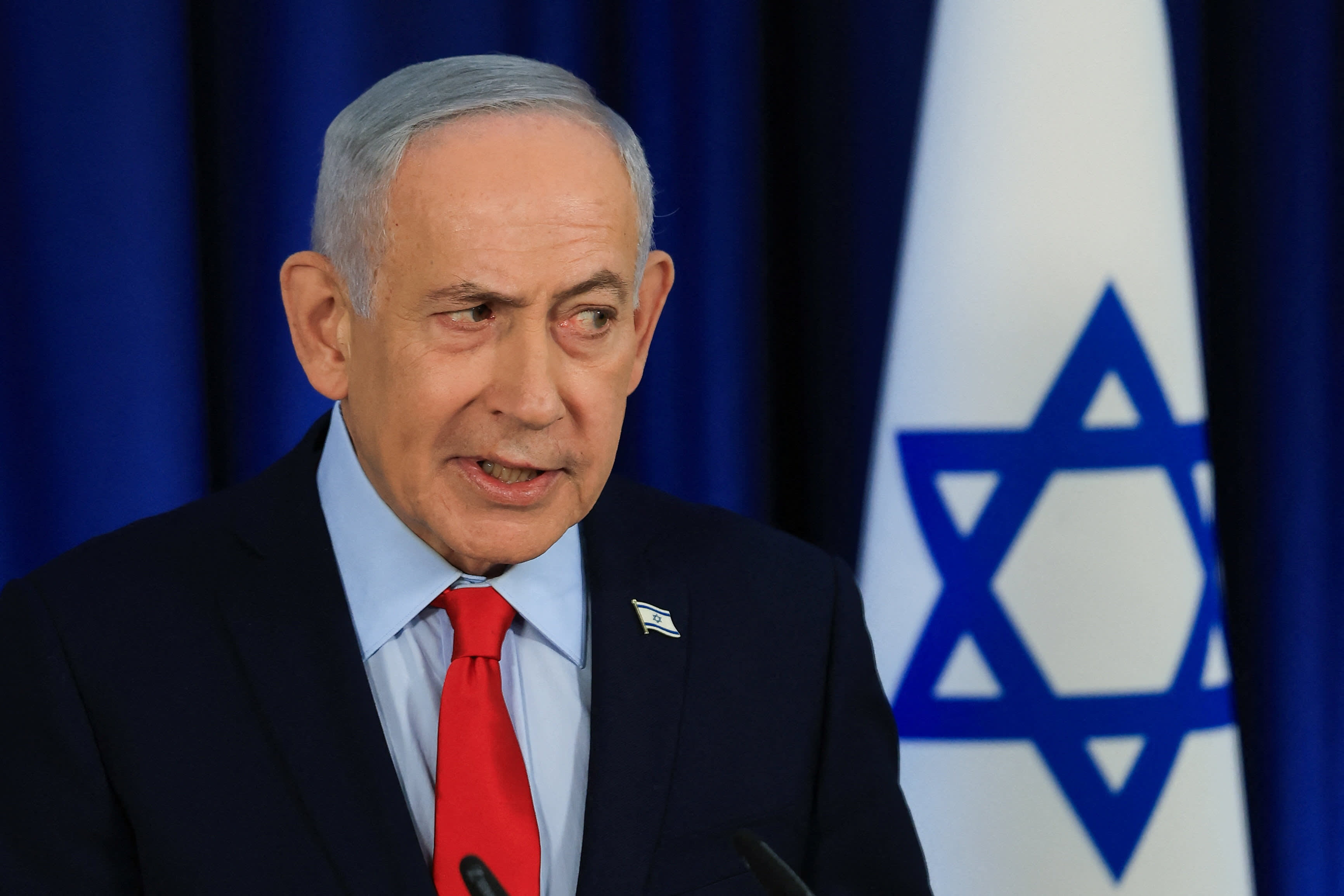
Israeli Prime Minister Benjamin Netanyahu has stated that the conflict with Iran is 'accomplished a great deal, but it’s not over.' This statement comes amid heightened tensions between the U.S. and Iran, with President Trump rejecting recent Iranian diplomatic overtures. The remark underscores the complex, evolving nature of Middle Eastern security dynamics, where military, political, and diplomatic efforts continue to intersect.
Netanyahu’s assertion reflects a strategic focus on the ongoing nature of the conflict, emphasizing that while significant progress has been made in disrupting Iranian nuclear activities, the broader geopolitical landscape remains volatile. The U.S. and Israel have long pursued a dual approach: direct military action against Iranian infrastructure and diplomatic engagement to curb Tehran’s nuclear program. However, recent developments, including Trump’s rejection of Iran’s latest offer, have intensified pressure on regional actors to balance immediate security concerns with long-term strategic goals.
Is the Iranian Nuclear Deal Still Viable?
Under the Joint Comprehensive Plan of Action (JCPOA), which expired in 2018 after the U.S. withdrew, Iran had agreed to limit its nuclear activities in exchange for sanctions relief. The current situation shows that Iran has resumed its nuclear program, raising questions about the effectiveness of diplomatic efforts. Netanyahu’s comments suggest that while some tactical successes have been achieved, the war with Iran is a multi-dimensional challenge requiring sustained international coordination.
The U.S. has historically played a key role in shaping regional security policies, but its shifting priorities under different administrations have created uncertainty. Trump’s recent rejection of Iranian diplomatic overtures highlights a divergence in U.S. strategy, with Washington now focusing on immediate threats rather than long-term nuclear agreements. This tension has implications for Israel’s ability to act independently in its security framework.
- The conflict with Iran has evolved from a nuclear dispute into a broader regional security crisis.
- Netanyahu emphasizes the need for continued military and diplomatic efforts to counter Iranian threats.
- Iran’s response to U.S. and Israeli actions remains unpredictable, given its history of strategic ambiguity.
One critical factor shaping the future of the conflict is the role of regional allies. Countries like Saudi Arabia and the UAE have increasingly aligned with U.S. interests, creating a more cohesive front against Iranian influence. However, this alliance is fragile and could fracture if strategic priorities shift.
Analysts suggest that the war with Iran will not be resolved through a single action or agreement but through a combination of diplomatic, military, and economic measures. The U.S. must balance its engagement with Iran while addressing the broader implications of its actions on regional stability and global security.
As the conflict continues, Netanyahu’s stance highlights the challenges of defining a 'win' in an asymmetric conflict. The phrase 'accomplished a great deal, but it’s not over' serves as a reminder that progress in conflict resolution is often incremental and context-dependent.