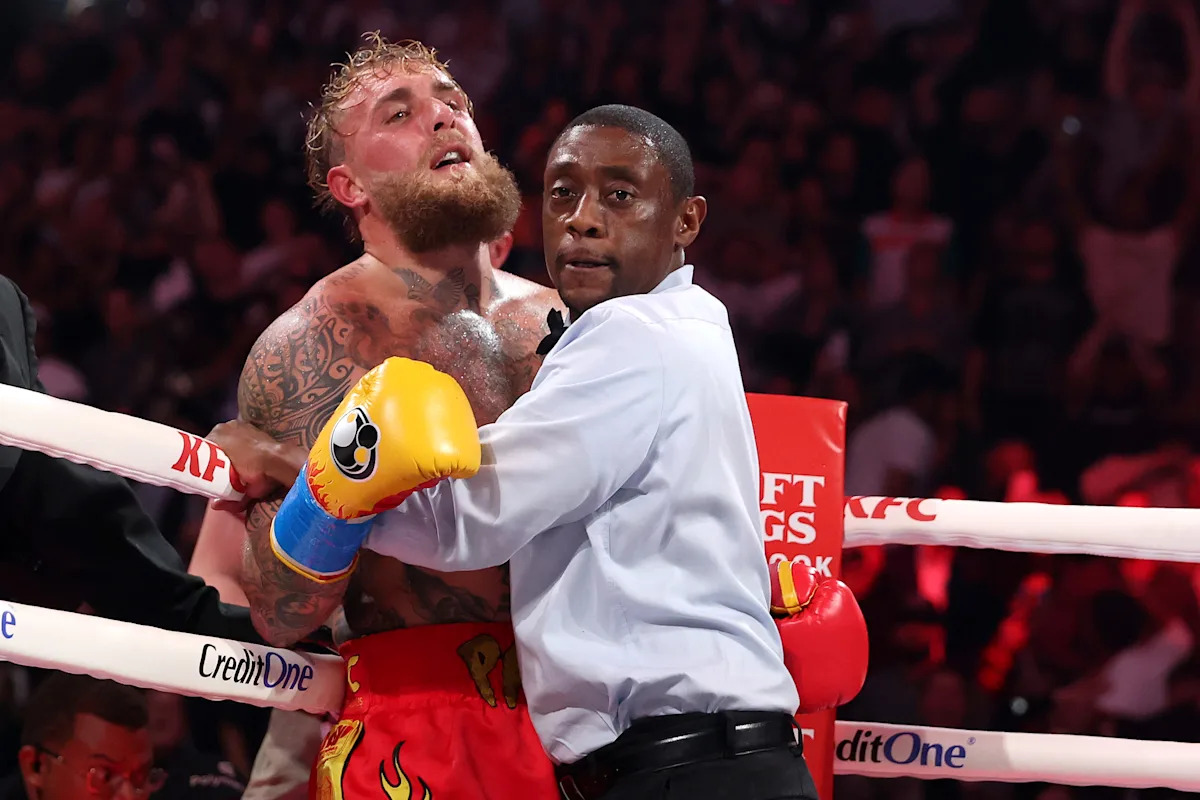
Jake Paul's decision to enter professional boxing in 2020 marked a bold pivot from his digital empire to the squared circle. At 29, he faced a pivotal moment when his first professional bout against Anthony Joshua in December 2025 resulted in a jaw fracture that has now become a defining medical concern.
The injury, described by medical professionals as a 'complex jaw break,' has delayed his return to competition for over six months. With a career spanning only 14 official fights, Paul’s current situation hinges on a critical medical scan scheduled for the coming weeks. This incident has sparked widespread speculation about his future in the sport, particularly given his history of prioritizing financial gain over physical health.
Could a single injury end a boxing career?
Boxing, as a high-impact sport, carries significant risks of catastrophic injuries. Jaw fractures, especially when caused by a punch from a professional opponent, can lead to long-term complications. In Paul’s case, the fracture required surgical intervention and has left him with persistent swelling and limited mobility. Unlike many boxers who recover with time, Paul’s case represents a rare instance of a jaw injury with potentially irreversible consequences.
Medical experts have noted that jaw fractures from direct impacts are common in boxing, but the severity of Paul’s injury differs from typical cases. The injury’s complexity suggests a higher likelihood of complications, such as nerve damage or misalignment of the jaw structure. These factors could prevent him from resuming training or competing at an elite level.
- Jaw fractures in professional boxing often require 3–6 months of recovery, but Paul’s case is more severe.
- The 2025 medical scan results could determine whether he can return to competition.
- His 14-fight career makes this injury particularly significant for a fighter who has not yet achieved a major championship.
Paul’s decision to compete against Anthony Joshua—a fighter known for his technical precision—was a strategic move to gain credibility in the sport. However, the physical toll of this match has now overshadowed his earlier successes. While many boxers recover from such injuries, Paul’s case is unique due to the nature of the jaw fracture and its potential long-term impact.
Experts warn that if the medical scan reveals permanent damage, Paul could face a permanent retirement. This would be a stark contrast to his previous career trajectory, where he has often prioritized financial opportunities over physical health.
What does this mean for future boxing?
The incident highlights the physical risks of boxing, especially for fighters who have not yet achieved their full potential. For Paul, the implications could extend beyond his personal career, affecting the broader landscape of professional boxing as a sport. His story serves as a cautionary tale for aspiring fighters who may underestimate the physical demands of the sport.