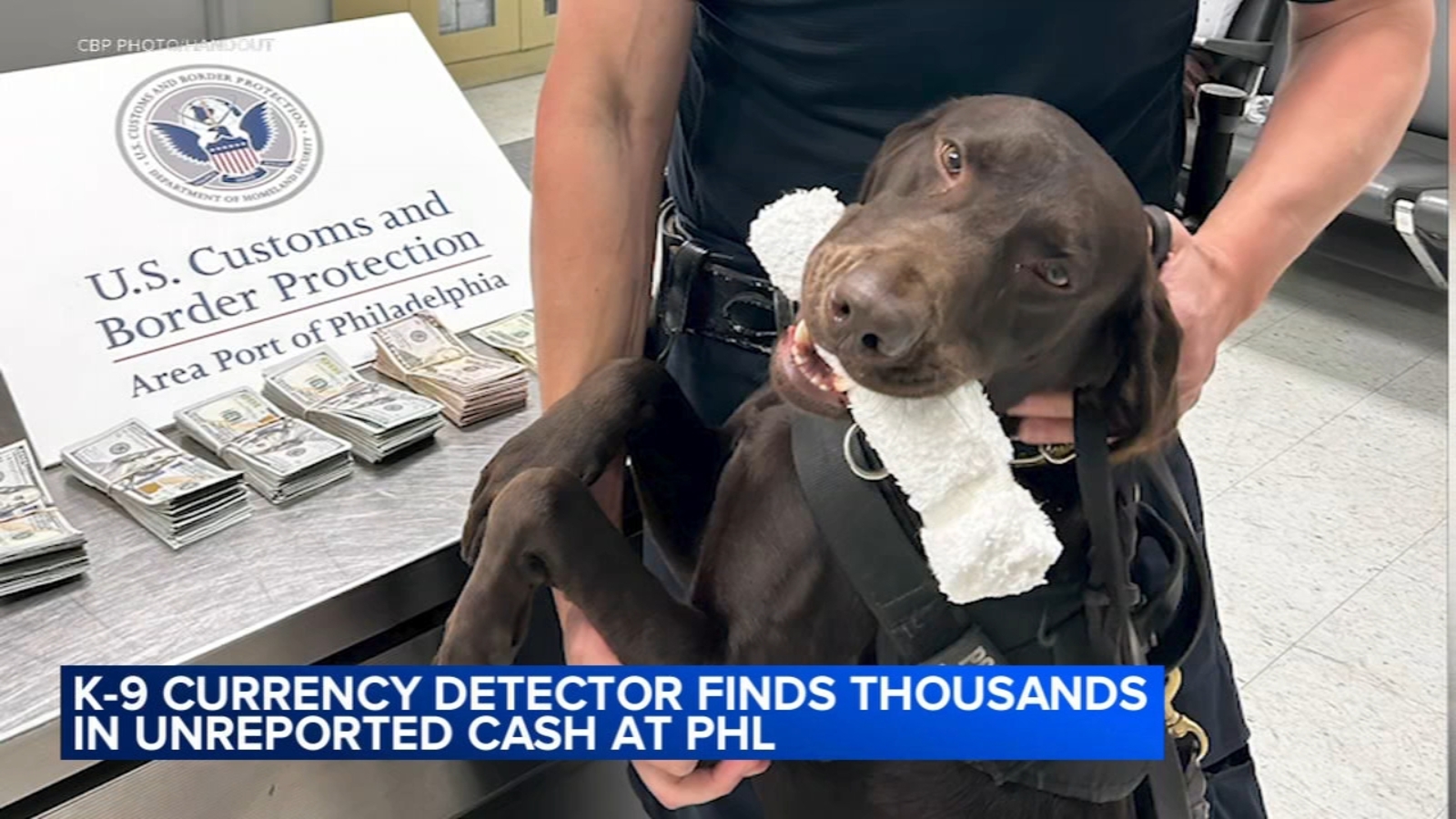
K-9 Units Uncover $44,000 in Cash at Philly Airport: How CBP's Tech-Driven Border Security Works

Editor 11 May, 2026 ... min lectura

As U.S. Customs and Border Protection (CBP) continues to innovate in border security, a recent incident at Philadelphia International Airport highlights the critical role of K-9 units in detecting illicit financial activity. In a case that has drawn national attention, a K-9 currency detector identified thousands of unreported dollars hidden in the luggage of a Mexico-bound traveler, resulting in a $44,000 seizure. This operation underscores the evolving nature of cross-border financial crime and the advanced tools CBP employs to combat it.

How Does a K-9 Detect Millions in Cash?

At the heart of this operation is the K-9 unit, a specially trained dog capable of identifying large quantities of currency, firearms, and other prohibited items. Unlike human agents, these canines rely on their exceptional sense of smell to detect subtle chemical signatures left by cash. The process begins when a K-9 unit, such as the 'K9 Nitro' mentioned in recent reports, is deployed to scan luggage. K-9s like Nitro, a 3-year-old chocolate Labrador retriever, are trained to alert on specific chemical compounds associated with high-denomination bills, such as $100 and $500 bills.

The detection process is highly precise. K-9s are trained to differentiate between legitimate and illicit currency. For instance, in the Philadelphia case, the dog identified a significant amount of cash that the traveler had hidden in their luggage, which would have been difficult for automated systems to detect due to its unreported nature.

Why K-9s Are Critical for Border Security

  • Real-Time Detection: K-9 units can locate hidden cash within seconds, significantly reducing the time it takes for agents to identify large-scale financial crimes.
  • High Accuracy: K-9s have a 98% success rate in identifying bulk currency, according to CBP data from 2023–2024.
  • Scalability: K-9 teams can cover vast areas of airports and border crossings without overwhelming human resources.

This case demonstrates how K-9 units complement traditional methods like manual inspections and automated systems. The $44,000 seizure, which occurred at Philadelphia International Airport, highlights the growing threat of cash smuggling across U.S. borders and the importance of integrating canine units into the national security framework.

CBP’s strategy involves deploying K-9 units at high-risk entry points, such as major airports and ports. These units are trained to detect not only currency but also other prohibited items like drugs and explosives. The effectiveness of K-9s in reducing smuggling is well-documented, with cases like this one showing significant impact on the scale of financial crimes.

While this incident focuses on cash, the broader implications for border security are far-reaching. As global trade and travel increase, the need for advanced detection systems becomes more urgent. K-9 units represent a critical component of CBP’s multi-layered approach to securing the nation’s borders.