Critical Water Infrastructure Crisis: Oakland County Faces 2-Week Water Outage After Major Main Break

Editor 11 May, 2026 ... min lectura

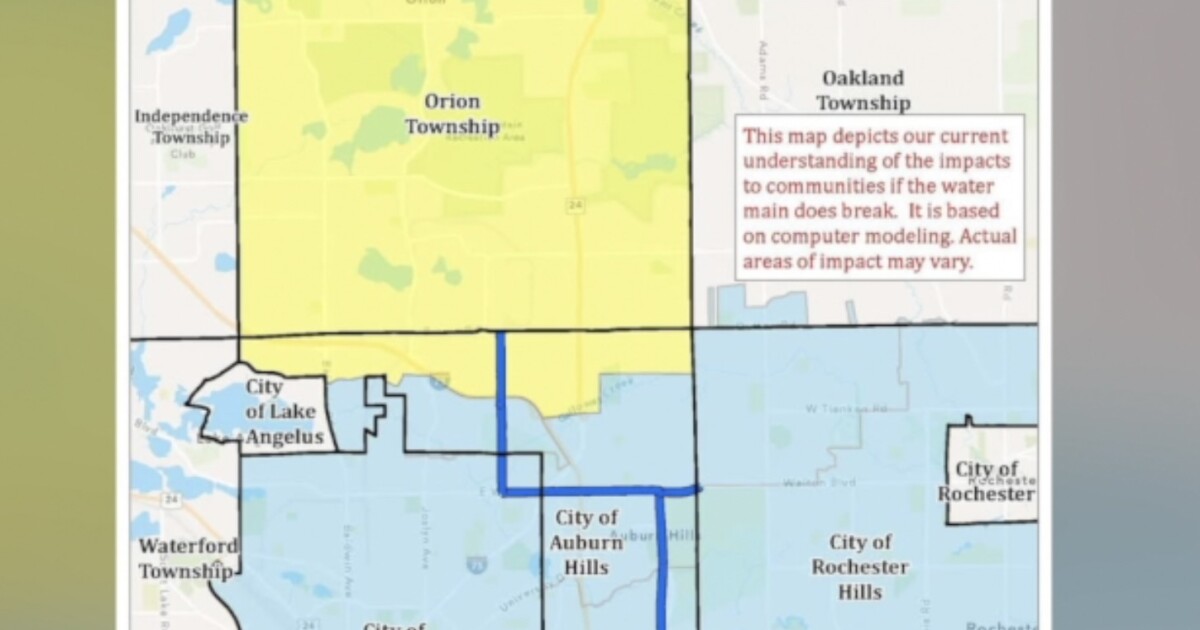
On May 10, 2026, a catastrophic 42-inch water main rupture in Auburn Hills, Michigan, triggered an immediate state of emergency across multiple communities in Oakland County. The incident, discovered during routine maintenance on a critical transmission main in River Woods Park, has placed over 50,000 residents at risk of prolonged water disruption.

Emergency water use orders have been activated for affected areas, with local authorities confirming that the leak could result in water service interruptions lasting up to two weeks for some residents. This is the largest infrastructure failure of its kind in the region since the 2019 Grand Rapids water crisis, highlighting the vulnerability of aging municipal systems.

How Does a Single Main Break Impact Millions?

The significance of this event extends far beyond a localized issue. A 42-inch water main—nearly twice the size of standard mains—represents a critical node in the county's water distribution network. When such a large diameter main fails, it creates a cascading effect across interconnected systems, disrupting entire service corridors.

  • Over 15,000 households in Auburn Hills and adjacent townships are currently without water access
  • Emergency water use orders have been issued for 25% of Orion Township's population
  • The incident has prompted emergency response teams to deploy specialized equipment to contain the leak

The regional water authority has confirmed that the failure is due to corrosion in a 40-year-old pipeline, a common issue in older infrastructure systems. This type of failure is particularly dangerous because it often occurs in areas with high water pressure and minimal redundancy in the network.

Residents in the affected zones have been instructed to use only emergency water for non-essential needs. The state of emergency declaration follows a pattern observed in similar incidents since the 2018 Detroit water main crisis, when a 36-inch main broke and caused widespread outages.

Local officials are working with the Michigan Department of Environment Quality to deploy rapid response teams and implement temporary water diversion routes to minimize disruption. The incident underscores the critical need for proactive maintenance of aging infrastructure, especially in regions with high population density and aging systems.

The crisis has also revealed gaps in contingency planning for water infrastructure failures. With climate change increasing the frequency of extreme weather events, the resilience of water systems is becoming a top priority for regional planners.