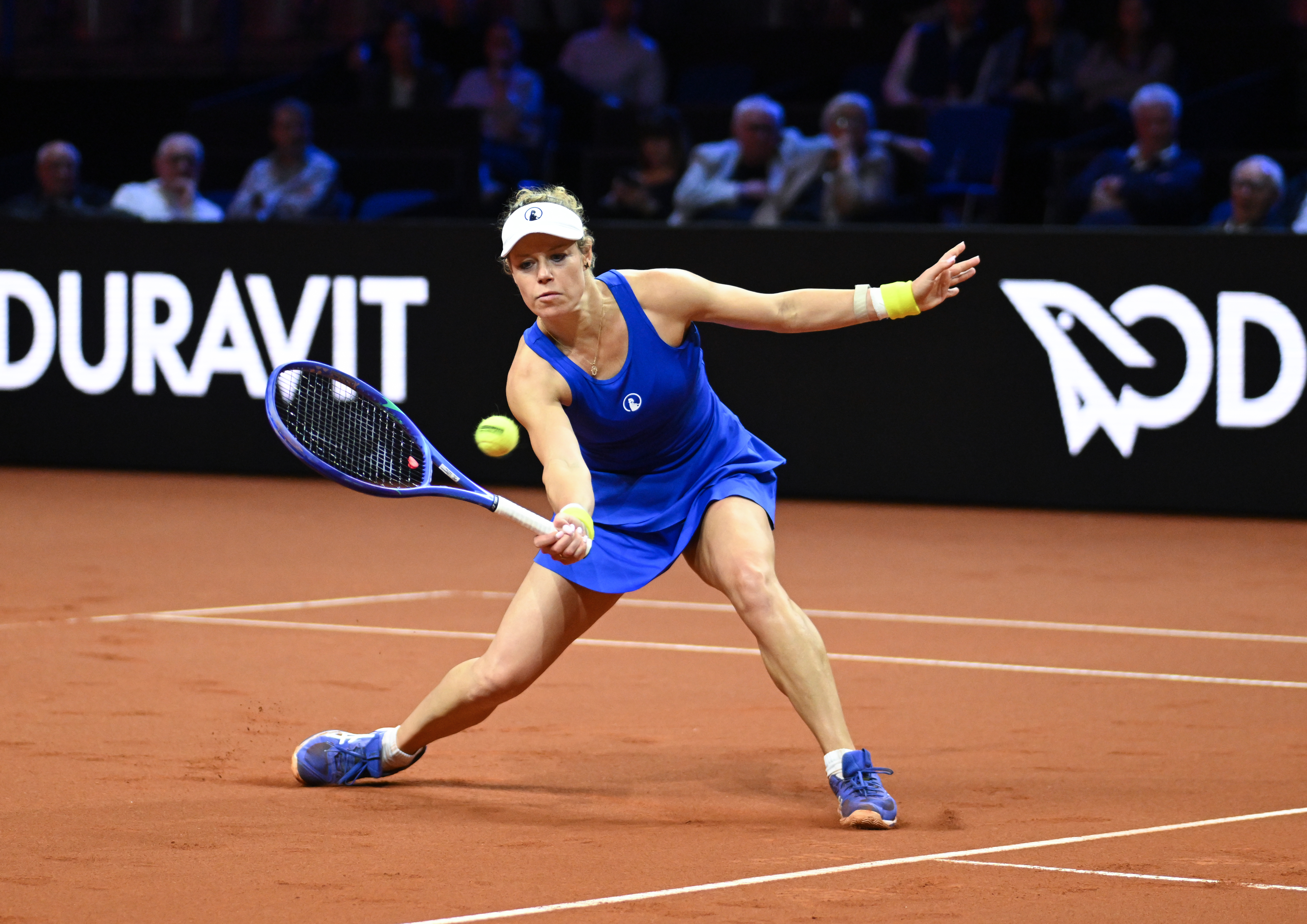
Laura Siegemund's Strategic Mastery: How She Outmaneuvers Top Contenders in Rome

Editor 10 May, 2026 ... min lectura

As the 2026 WTA Rome tournament unfolds, tennis legend Laura Siegemund has once again proven her ability to outmaneuver elite competitors with precision and tactical intelligence. Her recent victory over Ekaterina Alexandrova, a cornerstone of the WTA Top 20, marks her second consecutive Top 20 win of the 2026 season—a feat that underscores her evolving mastery in high-stakes environments.

At the heart of Siegemund’s success lies a deeply strategic approach to match dynamics. Unlike many players who rely solely on physical dominance, she leverages her understanding of opponent tendencies to create openings. In her Rome showdown with Alexandrova, she identified a critical vulnerability in the Russian’s baseline game, exploiting it with precision shots that disrupted the rhythm of the match. This adaptability, honed through years of competitive experience, reflects a mindset that prioritizes intelligence over brute force.

Why does Laura Siegemund’s strategy matter for emerging players?

Siegemund’s tactical acumen offers a blueprint for younger athletes navigating the complexities of modern tennis. Her ability to analyze opponents in real time—such as recognizing Alexandrova’s tendency to overcommit on deep drives—demonstrates how data-driven decision-making can shift outcomes in favor of players who prioritize adaptability. This approach is increasingly vital as the sport evolves toward more nuanced, skill-based competition.

  • Adaptive positioning: Siegemund adjusts her court coverage based on opponent movement, minimizing errors and maximizing transition opportunities
  • Psychological resilience: She maintains composure under pressure, using mental preparation to offset physical fatigue
  • Targeted aggression: She focuses on exploiting specific weaknesses rather than broad, uncoordinated attacks

For aspiring players, this means understanding that success in tennis is not just about physical prowess but about strategic intelligence and mental fortitude. Siegemund’s approach shows that even in a sport often perceived as physical, mental agility and tactical precision can be decisive factors.

While her victory over Alexandrova has been widely celebrated, it’s important to acknowledge that this win is part of a larger narrative. As the sport continues to evolve with technology and analytics, players like Siegemund are setting new standards for how tennis is played and understood. Her ability to combine technical skill with strategic foresight makes her a model for the future of the sport.