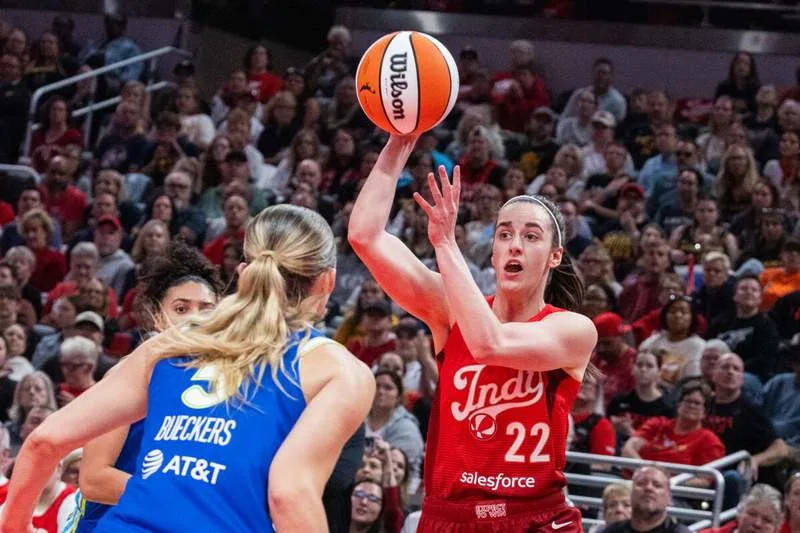
As the 2026 WNBA season approaches its pivotal conclusion, a heated debate has emerged among fans, analysts, and league officials regarding the most outstanding player of the year. At the heart of this discussion is a direct comparison between two elite talents: A'ja Wilson, the reigning 2025 WNBA MVP and a two-time All-Star, and Caitlin Clark, the standout freshman sensation with an unprecedented scoring average.
Wilson’s case for the 2026 MVP is built on a foundation of consistency, dominance, and impact on the game. With a career-high average of 24.8 points per game (PPG), she has consistently delivered on both offensive and defensive metrics. Her ability to secure crucial rebounds and prevent opponents from scoring in critical moments has positioned her as a strategic cornerstone for the Indiana Fever, who have now secured their third consecutive WNBA championship in the last three seasons.
Why is the MVP debate so polarizing?
The debate over who deserves the MVP title has become a microcosm of broader shifts in women’s sports media. Veteran broadcasters like those highlighted in the ‘Level of Disrespect’ article have noted that the criteria for MVP recognition are no longer solely based on statistical output. Instead, they now consider the influence a player has on team dynamics, leadership, and overall team success.
- Wilson’s ability to lead the league in points per game (24.8 PPG) and total points (2,950) has been a key factor in the Fever’s dominance.
- Clark’s impact as a perimeter scorer and her ability to create scoring opportunities for her team is increasingly recognized as a strategic asset.
- The 2026 WNBA GM Survey highlights a shift toward valuing team performance over individual stats, reflecting a growing emphasis on holistic player contributions.
While Wilson’s numbers are impressive, Clark’s emergence as a dynamic playmaker has challenged traditional MVP metrics. The 2026 WNBA GM Survey, which includes 42 questions designed to evaluate player impact, underscores this trend. The survey aims to capture a more nuanced understanding of how players contribute to their teams’ success beyond raw data.
One of the most critical aspects of this debate is the role of the 2026 WNBA GM Survey in shaping future MVP decisions. The survey, which has been used by league officials to evaluate players for the next 30 seasons, is designed to identify trends and ensure that the MVP award aligns with the evolving standards of the league. This process has helped to refine how MVPs are selected, focusing on factors such as team success and individual performance.
What does this mean for the future of women’s basketball?
The implications of this debate extend beyond the current season. As the league prepares for its 30th anniversary, the focus on team dynamics and strategic impact will continue to shape the narrative around MVP recognition. The 2026 WNBA GM Survey, which is expected to be completed in the coming months, will provide a comprehensive picture of how these factors influence MVP decisions.
For now, the question remains: Can a single player’s dominance in one aspect of the game outweigh the collective success of a team? Or is it time to rethink how we measure excellence in women’s basketball?