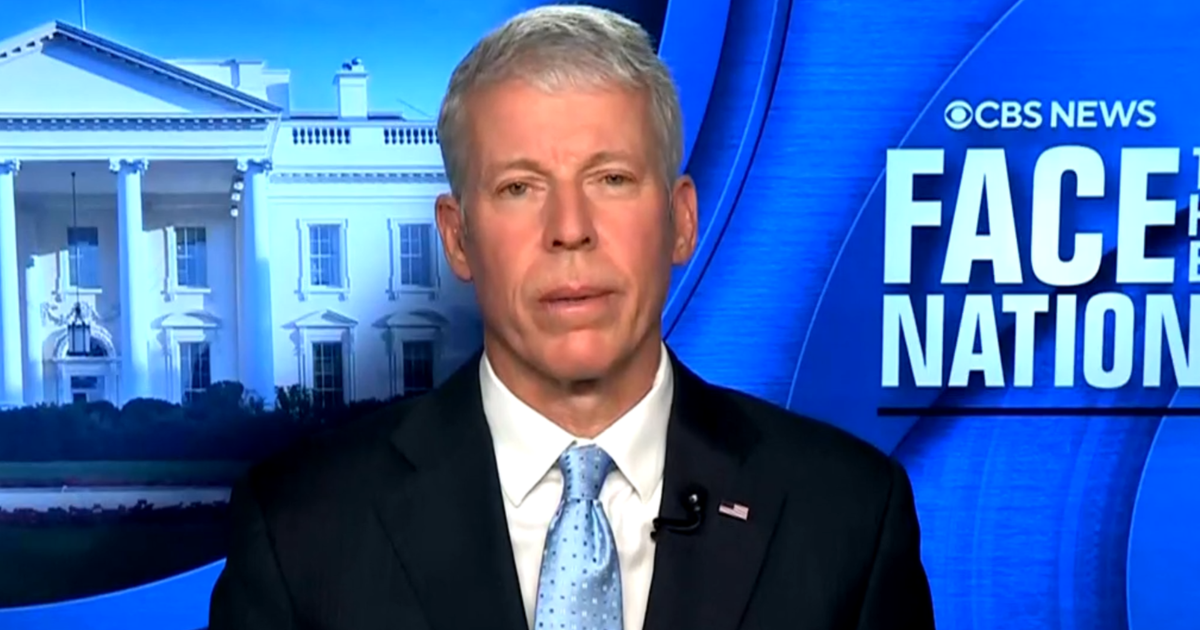
On May 10, 2026, Energy Secretary Chris Wright addressed critical energy and geopolitical challenges during a live interview with Face the Nation host Margaret Brennan. His remarks highlighted a pivotal moment in U.S. energy strategy as the nation navigates complex dynamics between energy security, climate action, and international relations, particularly in the context of U.S.-Iran negotiations.
Wright emphasized the urgency of balancing domestic energy needs with global stability. “We are at a crossroads,” he stated, “where economic and environmental imperatives must converge to ensure long-term resilience. The recent sharp decline in Brent crude below $100 per barrel signals a potential turning point in global oil markets, but it also underscores the fragility of current energy supply chains.”
Can U.S. Energy Policy Adapt to Rapid Market Volatility?
Wright detailed a shift from reactive to proactive energy management, acknowledging that traditional market-driven approaches are no longer sufficient. He cited the recent oil drop below $100 as an example of how market forces are reshaping expectations. “This isn’t a temporary fluctuation,” he added, “it’s a structural change driven by geopolitical realignments, including the recent U.S. diplomatic pivot toward Iran.”
- The U.S. government is accelerating discussions on a new energy security framework that prioritizes diversification beyond oil-dependent economies.
- Collaboration with Gulf states and European partners is being intensified to reduce dependency on single-source energy flows.
- Wright highlighted the critical role of renewable integration in stabilizing markets amid supply chain disruptions.
Notably, Wright linked the recent U.S. step back on Hormuz to broader strategic recalibration. The Trump kneels in front of Mojtaba? narrative, while controversial, reflects public skepticism about diplomatic gestures, but Wright stressed the importance of tangible outcomes over symbolic gestures. “We cannot afford to misinterpret diplomatic gestures as policy shifts,” he warned, “especially when real economic progress is at stake.
Historically, the U.S. has leveraged energy policy as a diplomatic tool, as seen in the 2015 Paris Agreement and the 2020 oil price crash. However, the current context—marked by heightened tensions with Iran and volatile global oil prices—requires a more nuanced approach. Wright’s focus on long-term resilience over short-term gains aligns with the broader shift toward sustainable and stable energy systems.
Analysts suggest that this strategic pivot could have significant implications for the future of U.S. energy policy, including potential reforms in export regulations, increased investment in alternative energy, and a more flexible stance on regional conflicts. The outcome of U.S.-Iran negotiations, which have recently seen a near deal signal, will be critical in shaping these policies.