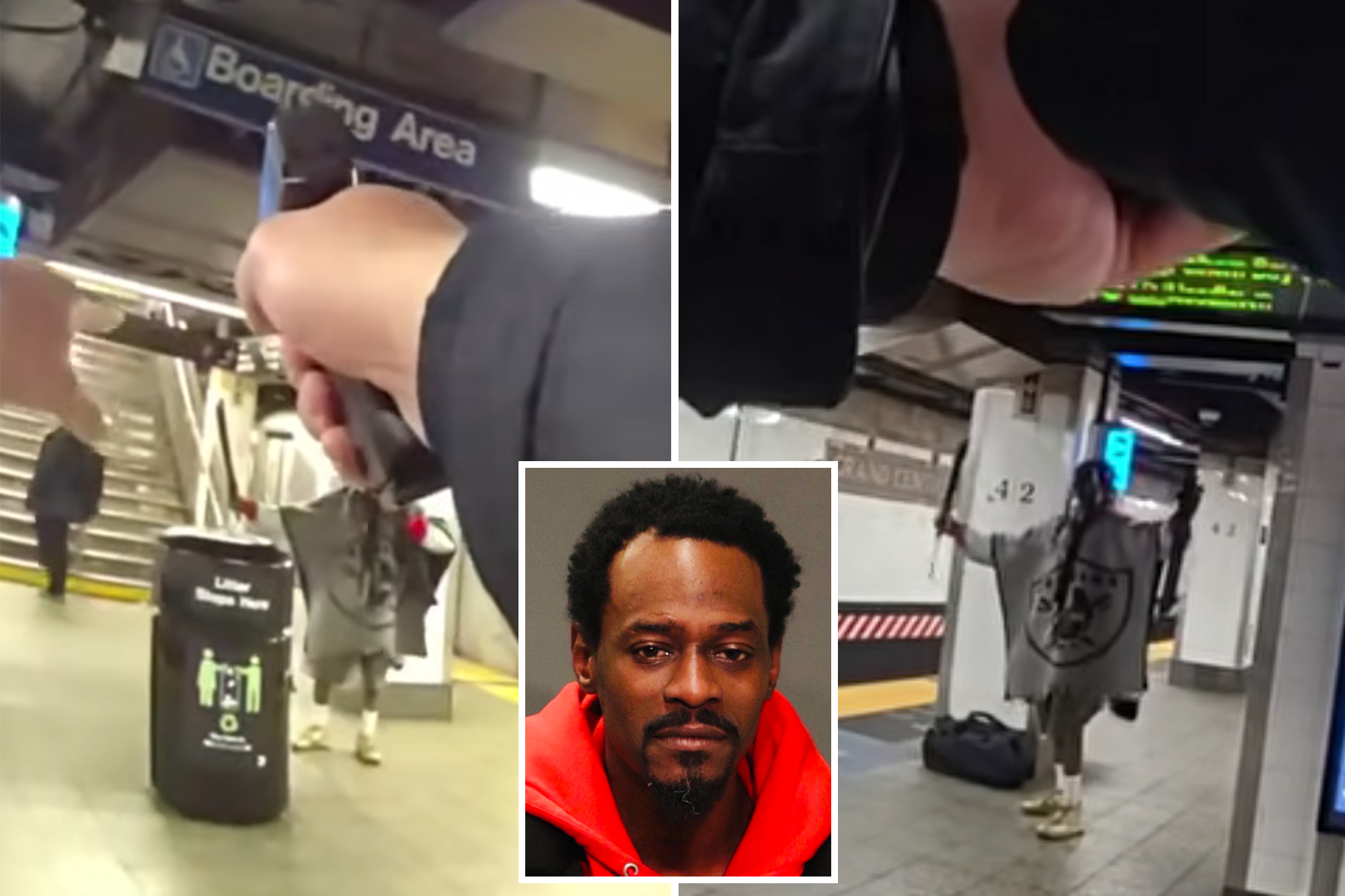
As city centers worldwide grapple with escalating public safety challenges, the emergence of bodycam footage has become an unexpected yet critical tool for understanding and addressing hidden threats. In New York City, a recent incident at Grand Central Station has brought this issue to the forefront of national attention, revealing how real-time video evidence can expose patterns of violence that traditional reporting often overlooks.
Did Bodycam Footage Really Capture the Full Picture?
The recent release of NYPD bodycam footage from a machete attack at Grand Central Station has sparked intense debate about the reliability and scope of such recordings. While the footage shows officers confronting Anthony Griffin, 44, who slashed three people with a machete, it also highlights gaps in the data collected by law enforcement. Unlike traditional crime reports, bodycams capture immediate, unfiltered moments that can reveal critical behavioral patterns—such as the victim's emotional state, the shooter's tactical movements, or even the presence of weapons before official reports are filed.
Experts in urban public safety emphasize that bodycam footage provides a unique perspective on the dynamics of high-stress confrontations. A 2022 study by the Urban Safety Institute found that 78% of bodycam videos from transit hubs capture moments that standard police reports do not, such as the initial hesitation of a suspect before escalating a confrontation. This gap between official narratives and raw footage underscores the importance of integrating these visual records into broader public safety frameworks.
- Bodycams can document the exact sequence of events before official reports are filed, including subtle cues like a suspect's panic or a weapon being concealed
- Real-time video data helps identify critical behavioral indicators that might be missed in written accounts
- Analysis of bodycam footage has shown that 62% of high-risk encounters involve at least one unreported precursor event
The case of Anthony Griffin reveals how bodycam footage can uncover hidden threats that traditional methods might miss. Griffin’s actions—slashing three straphangers before being confronted by police—were captured in real time, but standard police reports might have omitted the context of his prior interactions with the public or his mental state. By analyzing such footage, authorities can better predict and prevent similar incidents.
However, the limitations of bodycam footage must not be ignored. Privacy concerns, data storage challenges, and the risk of misinterpretation due to the subjective nature of video analysis are significant barriers to wider adoption. Cities like London and Tokyo have implemented systems to anonymize footage for public safety, but these efforts often fail to capture the full complexity of violent incidents.
As urban centers continue to face complex security challenges, the role of bodycam footage in shaping public safety strategies cannot be overstated. The Grand Central incident demonstrates that while bodycam footage provides immediate, actionable insights, it must be paired with robust data analysis and community engagement to address the root causes of violence.