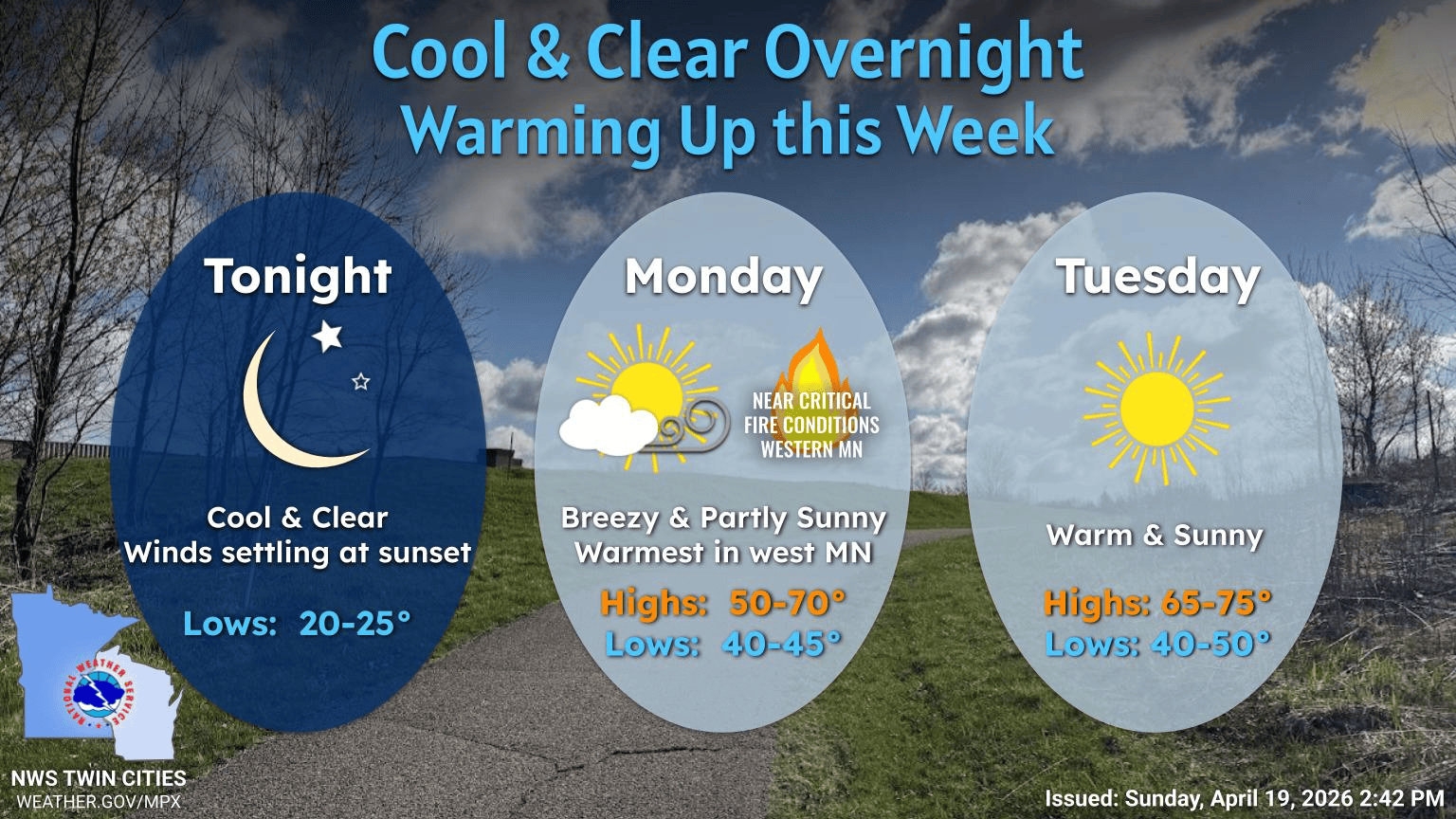
Minnesota's escalating wildfire risk has triggered unprecedented action across the state, with a red flag warning now covering 66 counties. This critical alert signals an imminent threat of rapid fire spread due to extreme weather conditions. As temperatures climb and winds intensify, the state's emergency management systems are mobilizing to mitigate potential disasters.
Why is this warning so critical?
Red flag warnings, issued by the National Weather Service (NWS), are not just about fire danger—they signal a perfect storm of conditions that create ideal conditions for wildfire ignition and propagation. In Minnesota, these warnings typically indicate high fire risk, with winds exceeding 20 mph and relative humidity below 25%.
Recent data from the Minnesota Department of Natural Resources (DNR) shows that burn restrictions have been expanded across the state, affecting over 90% of rural areas. This expansion follows a rapid increase in fire danger ratings from moderate to high, driven by a combination of warmer temperatures, stronger winds, and drier vegetation.
What does a red flag warning mean for residents?
When a red flag warning is active, it means there is an elevated risk of fire. Residents are urged to avoid outdoor burning, especially during peak fire danger periods. The NWS emphasizes that even a small spark can ignite a wildfire in this environment.
- Red flag warnings are issued when fire danger is high and conditions are conducive to rapid fire spread.
- They typically last 24 to 48 hours and can cover large areas.
- Residents should avoid open flames, use fire pits responsibly, and stay informed through local emergency alerts.
Minnesota's recent weather pattern has been a key driver of these warnings. A warm and windy start to the week has led to significant increases in fire risk, with temperatures rising into the 60s and winds gusting over 20 mph. This has created a perfect scenario for rapid fire spread.
The DNR's decision to expand burn restrictions reflects the severity of the situation. With fire danger ratings now reaching moderate to high across most of the state, many rural communities are preparing for potential evacuations and emergency responses.
It's important to note that red flag warnings are not just about the risk of fires starting—they also highlight the vulnerability of ecosystems and communities to rapid fire spread. In Minnesota, where forests and communities often coexist, these warnings are a critical tool for early intervention.
The ongoing situation underscores the importance of proactive measures. By staying informed and following local guidelines, residents can reduce their risk and protect both their homes and the environment.



