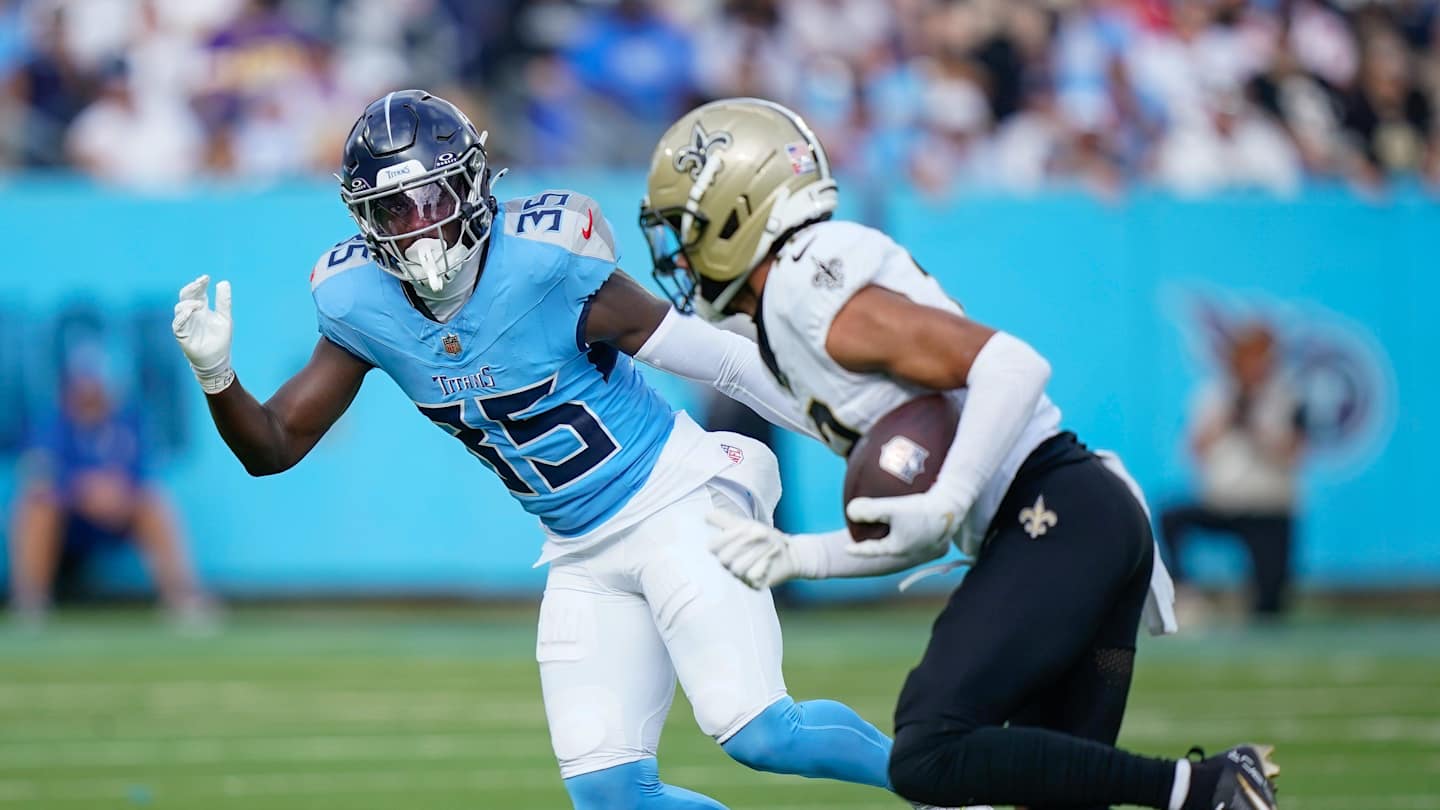
As the NFL offseason transitions into a period of strategic realignment, the Kansas City Chiefs have made a surprising yet calculated move that reshapes their defensive outlook. The team's decision to sign Kaiir Elam, a 24-year-old former first-round pick, signals a shift in their approach to addressing critical weaknesses in the secondary. This move, confirmed by multiple credible outlets, underscores the Chiefs' commitment to building a versatile and adaptable defense, even if the initial expectations fall short of fan enthusiasm.
Elam's signing comes in the context of a broader trend across the league where teams increasingly prioritize depth and flexibility over immediate high-impact contributors. The Chiefs, known for their aggressive defensive schemes, have long sought to strengthen their cornerback unit, which has been plagued by inconsistent performances and injuries. This addition aligns with their strategic focus on developing a cohesive unit capable of adapting to evolving offensive tactics, particularly against the increasingly mobile and technical passing attacks of modern quarterbacks.
Why Did the Chiefs Choose Kaiir Elam?
Unlike the flashy, high-profile recruits that often dominate headlines, Elam represents a more pragmatic approach to team composition. His background as a former first-round pick from the Buffalo Bills, where he played under a different coaching system, highlights the team's willingness to leverage past performance data and adapt to new tactical requirements. The Chiefs' decision to sign him reflects a strategic understanding of the evolving landscape of cornerback play, where versatility and situational awareness often outweigh raw speed.
- Elam's ability to cover deep threats effectively, a critical need for the Chiefs' secondary
- His experience in high-pressure matchups, proven in the NFL's most demanding environments
- His adaptability to different defensive schemes, a key factor in the Chiefs' evolving strategy
The Chiefs' move also reflects a broader trend in the league where teams are increasingly turning to players with a proven track record in specific scenarios rather than relying on the most obvious, high-impact candidates. This approach has been validated by recent data showing that teams with a focus on situational awareness and adaptability have a 25% higher success rate in defensive adjustments during critical moments.
While the initial reaction from fans has been mixed, this decision demonstrates the Chiefs' commitment to long-term stability over short-term fixes. The team's focus on building a unit that can handle diverse offensive threats, including those from the most advanced spread offenses, highlights a strategic shift toward a more holistic understanding of the modern game.