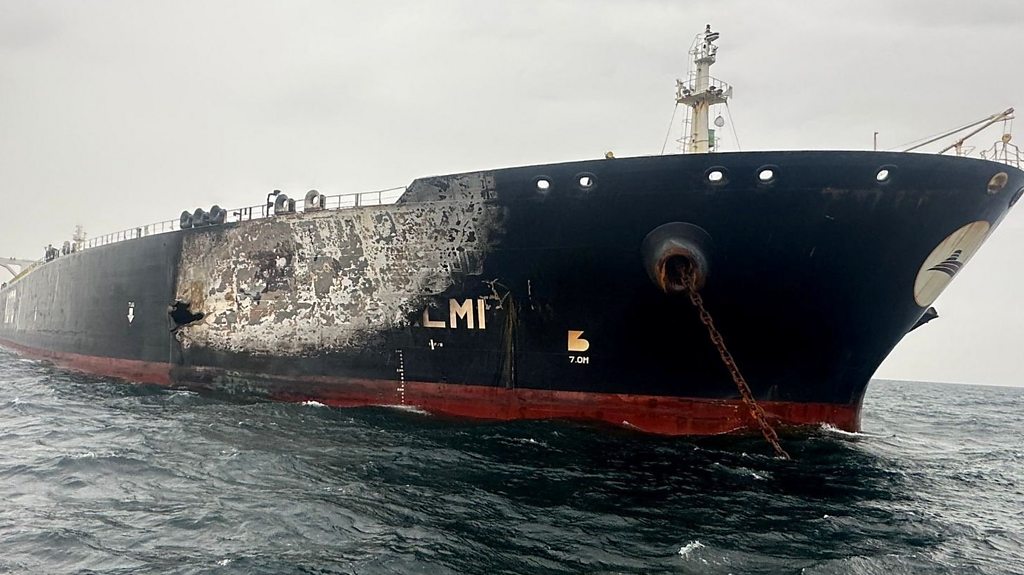
As geopolitical tensions in the Persian Gulf intensify, the recent attack on the Kuwaiti tanker near Dubai has become a critical flashpoint in the ongoing conflict between Iran and its adversaries. This incident, coupled with President Trump’s recent threats to target Iranian energy infrastructure, underscores the delicate balance between regional security and global energy security.
What Exactly Is the Threat? A Deep Dive into the Tanker Attack
The Al Salmi, a Kuwaiti-flagged vessel carrying two million barrels of crude oil, was reported to have been hit by an Iranian strike off Dubai’s coast. Local authorities confirmed that a fire on the ship was successfully extinguished, but the damage to the vessel and its cargo remains a matter of concern. This event is not isolated—it reflects a broader pattern of strategic aggression that has been escalating since the U.S. and its allies began targeting Iranian assets in the region.
- The attack highlights the vulnerability of global oil supply chains, which rely heavily on these key maritime routes.
- It demonstrates the direct impact of geopolitical tensions on the stability of oil exports from the Middle East.
- Iran’s response to such threats has historically involved asymmetric tactics, including drone strikes and missile attacks, which have become increasingly sophisticated.
The significance of this incident extends beyond immediate casualties or economic losses. The attack on the Al Salmi has intensified concerns about the reliability of oil shipments through critical maritime corridors, particularly those that traverse the Strait of Hormuz—a vital conduit for over 20% of the world’s oil exports.
Why Does Tehran Matter in This Equation?
Tehran’s strategic position as the center of Iran’s nuclear and energy programs has made it a focal point for international diplomacy. The city’s role in hosting key infrastructure, including the Bushehr nuclear power plant, has been under scrutiny for years. As the conflict in the Gulf deepens, Tehran’s ability to manage its own energy infrastructure becomes increasingly critical. The recent threats from U.S. officials to target Iranian energy facilities, including those in Tehran, have further complicated the situation.
Experts warn that this escalation could lead to a broader conflict if diplomatic channels fail to address the immediate threat to oil supply chains. The consequences of such a conflict would be severe, with global oil prices potentially spiking by 10-15% in the short term, according to the International Energy Agency (IEA).
Historically, Iran has often responded to aggressive actions with a mix of military and economic countermeasures. The recent attacks on oil tankers are part of a pattern of asymmetric warfare that has characterized Iran’s strategy in the region. This approach has proven effective in maintaining a degree of operational autonomy despite international sanctions and pressure.
As the conflict continues to evolve, the role of Tehran as a strategic hub for Iran’s energy and military operations will likely remain central to the unfolding crisis. The implications for global energy markets and international relations cannot be overstated.