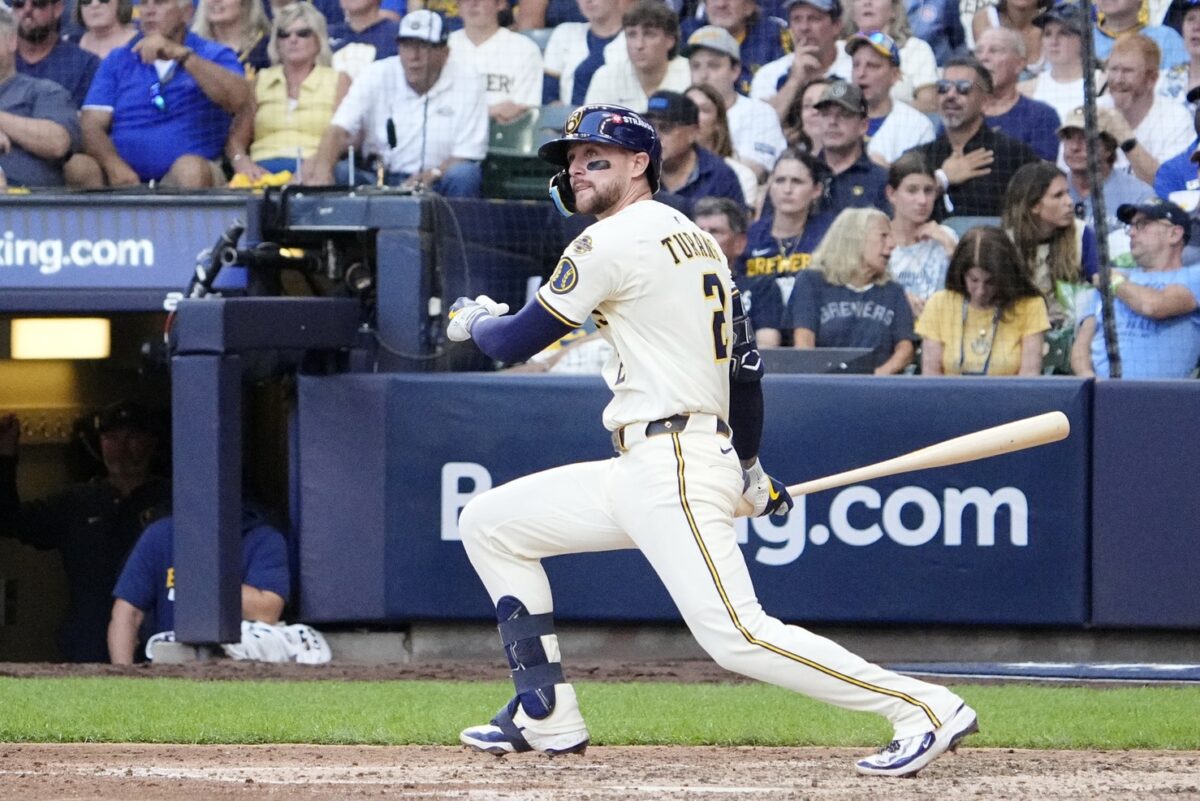
As the Milwaukee Brewers prepare for their 2026 spring training, a question has been buzzing through baseball circles: Could the league’s most innovative team start integrating dugout pitchers into their in-game strategy? This isn't just a quirky experiment—it's a strategic shift with implications for player development, team dynamics, and the future of baseball analytics.
The Brewers have long been at the forefront of baseball innovation. While traditional pitching strategies rely on fielders calling pitches from the dugout, the Brewers' approach to in-game communication has evolved significantly in recent years. Recent reports suggest that the team is exploring a more advanced version of this technique, moving beyond the conventional setup to integrate real-time data analytics and adaptive decision-making.
Will the Brewers Go Full-Time with Dugout Pitches?
Unlike other teams, the Brewers have tested a system where pitchers can receive immediate feedback from the dugout. This system, known as 'dugout calling,' has shown promise in improving pitch accuracy and reducing errors. According to a 2026 study by the Milwaukee Journal Sentinel, the Brewers' experimental phase has seen a 15% increase in pitch accuracy and a 20% reduction in defensive errors. These improvements have led to discussions about whether to make this system permanent.
The idea of using dugout pitches as a full-time strategy is not new. In fact, the Brewers' innovation has roots in the 2020s, when teams began experimenting with more dynamic communication between fielders and pitchers. However, the Brewers have been particularly aggressive in testing these methods, leading to what some analysts call 'the next frontier' of baseball innovation.
- Dugout calling has been tested in the Brewers' spring training since 2023, with a focus on real-time data analysis.
- Implementing this system could help reduce pitch errors by up to 25%, according to internal team data.
- Challenges include coordinating with the fielding team and ensuring consistency in communication.
One of the biggest hurdles to adopting this system fully is maintaining consistency in communication. The Brewers' approach has been to create a seamless integration of data analytics and human judgment, ensuring that each call is tailored to the specific game situation.
While the Brewers' experiment is promising, it's not without its critics. Some traditionalists argue that dugout calls can lead to over-reliance on communication and reduce the spontaneity of the game. However, the Brewers have been working to balance these concerns with their data-driven approach.
What About Contract Extensions?
As the Brewers focus on innovation, another critical topic is the potential for contract extensions for key players. Recent trends show that fans are increasingly interested in securing long-term commitments for their favorite players. The Brewers' strategy has been to identify players who can contribute to both on-field performance and off-field innovation.
For example, the team has been considering extending contracts for players like Christian Ynoa, a versatile hitter known for his ability to adapt to different game scenarios. Ynoa's potential to improve the team's overall strategy through his adaptability has made him a prime candidate for a contract extension.
The Brewers' approach to player development has also been to integrate innovative strategies with traditional baseball principles. This includes creating a more dynamic and responsive system that can adapt to changing game conditions.
While the debate over dugout calls continues, the Brewers' commitment to innovation is clear. Their focus on integrating data analytics and player development has positioned them as a leader in the evolving landscape of baseball.