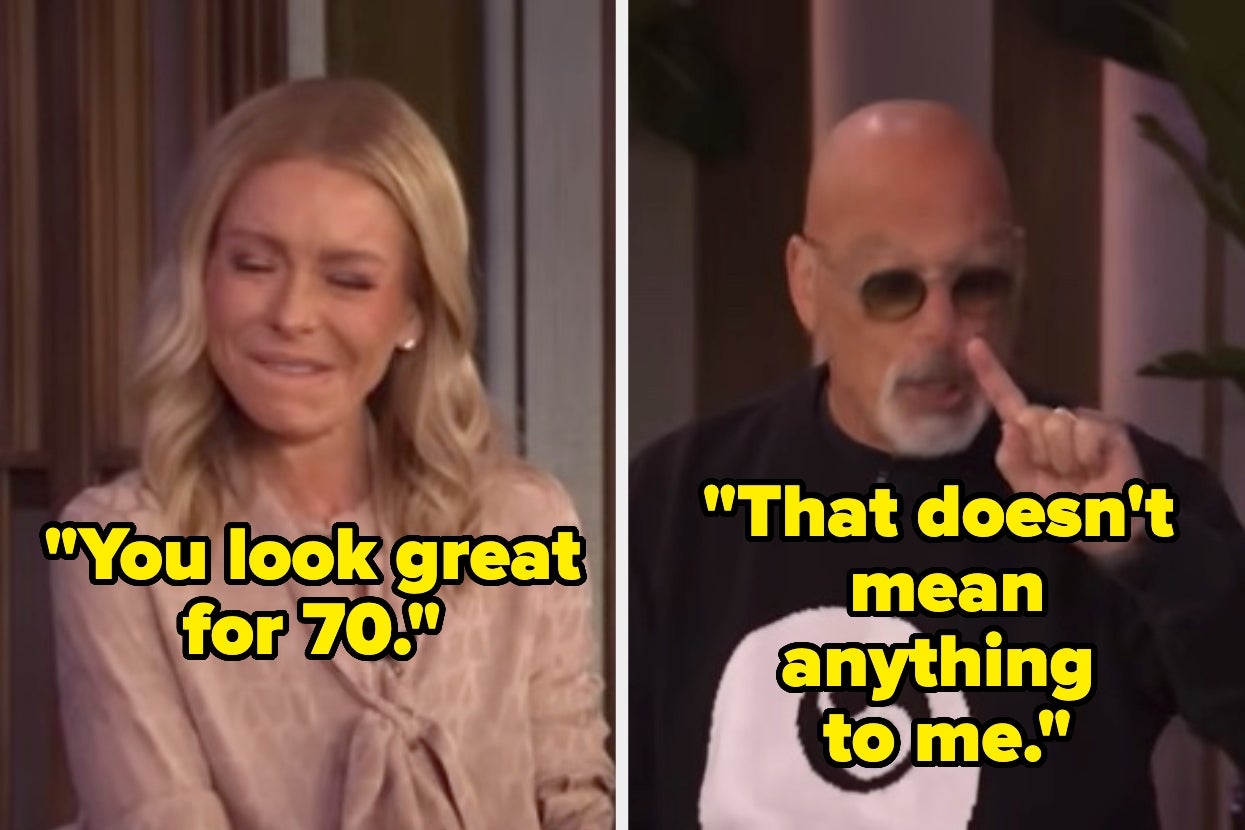
When comedy legend Howie Mandel's name is mentioned alongside late-night hosts Kelly Ripa and Mark Consuelos, it's rarely about their humor or talent. The recent high-profile clash between the three has become a cultural talking point, revealing deeper tensions about aging, perception, and media narratives. This isn't just a simple disagreement—it's a reflection of how age is increasingly weaponized in entertainment.
The incident occurred during a live broadcast segment where Ripa and Consuelos, both in their 50s, praised Mandel for 'looking great' at 70. Mandel's immediate reaction—a sharp ‘I don't like that’—was more than a reaction to a casual comment. It exposed the uncomfortable reality that age is often conflated with physical decline, a narrative that's been weaponized against older celebrities for decades.
Why Did Howie Mandel React So Strongly?
Mandel, who has long championed the importance of age as a source of wisdom and experience, has consistently reframed aging as a positive. He's spoken about how his decades of comedy and stand-up have given him a unique perspective on life, often emphasizing his resilience and adaptability. But this time, the remark felt personal—a direct challenge to his identity as a veteran comedian who's built his career on longevity and relevance.
The key to understanding his response lies in the ‘ageism’ that permeates modern media. While Ripa and Consuelos are known for their sharp comedic timing and longevity, their comments risked reducing Mandel's experience to a single point in time—his appearance at 70. Mandel's response wasn't just about age; it was a call to stop reducing his life story to a moment in time.
How Age is Weaponized in Entertainment
Behind this clash is a broader cultural shift where age is treated as a metric of value. In the entertainment industry, older figures are often pressured to ‘look young’ or ‘stay relevant’ to maintain their audience. This pressure creates a ‘performance of age’, where the focus shifts from how someone ages to how they *appear* to age. Mandel's reaction highlights the tension between authenticity and the industry's demand for constant renewal.
- Mandel's stance challenges the idea that older celebrities must constantly prove they're 'young' or 'relevant'—a narrative that has become increasingly pervasive in late-night TV and social media.
- Industry pressures often reduce aging to a single point in time, such as 'looking great at 70,' which strips away the complexity of a lifelong journey.
- Social media impact has intensified the pressure to maintain an 'ageless' image, with influencers and celebrities using age as a tool to signal their relevance in an ever-changing landscape.
Mandel's outburst wasn't just about being called 'great' at 70—it was a wake-up call about the dangers of reducing people to a single age bracket. The entertainment industry has long used age as a metric of value, but this incident shows how that framing can backfire when it's not aligned with the person's lived experience.
What's more, this clash reveals a growing trend: younger celebrities are increasingly being asked to 'look young' or 'stay young,' while older figures like Mandel are forced to confront the idea that their value isn't tied to a single point in time. This is a critical moment for the industry to reframe how age is perceived and valued.