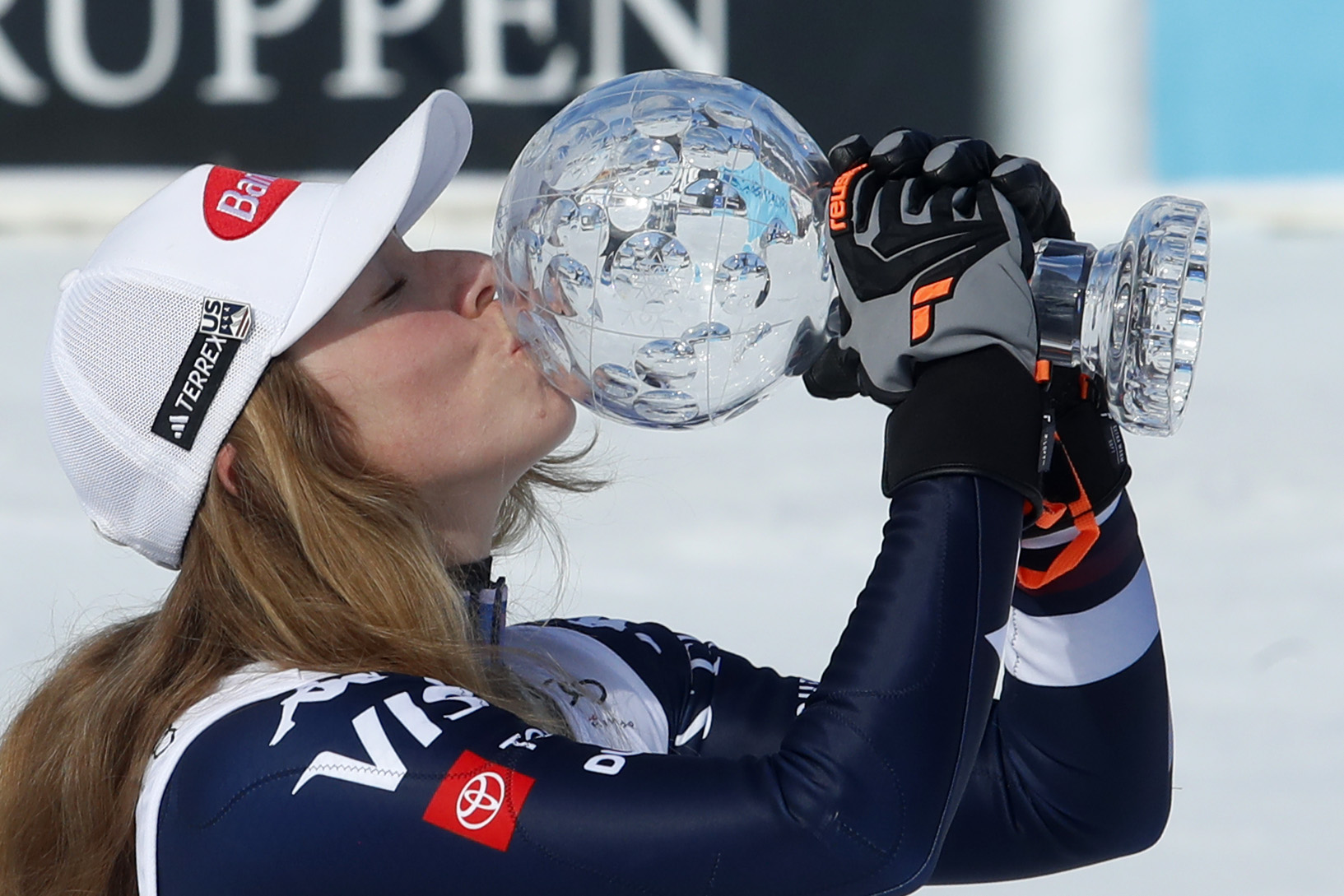
As the 2026 World Cup season unfolds, a name that has redefined excellence in alpine skiing continues to dominate headlines: Mikaela Shiffrin. With a record-tying ninth slalom victory and a career-high ninth World Cup title, Shiffrin has become the most successful American skier in history, reshaping the sport's trajectory through relentless precision and mental fortitude. Her journey isn't just about statistics—it's a masterclass in adapting to evolving competition dynamics while maintaining a rare blend of technical mastery and psychological resilience.
Can the Most Dominant Skier of Her Generation Keep the Momentum?
Shiffrin's ninth slalom win in the 2026 World Cup season places her at the precipice of a historic milestone: matching the record for most slalom victories in a single season. This isn't merely a statistical achievement; it's a testament to her ability to thrive under immense pressure. Her success stems from a unique approach to competition, blending biomechanical efficiency with an almost preternatural understanding of snow conditions and course design.
What sets Shiffrin apart is her strategic adaptability. Unlike her peers, who often struggle with consistency across varied terrain, she adjusts her technique mid-race based on real-time environmental cues. For instance, during the recent slalom race in Aspen, she modified her body positioning to counter unexpected wind patterns, a move that earned her a critical edge over competitors who relied solely on pre-race preparations.
- Shiffrin's ability to analyze and respond to dynamic conditions in real time
- Her mastery of the 'sweep-and-pivot' technique for high-speed turns
- Her psychological preparation for high-stakes races through pre-race visualization
Her approach has been validated by data. In the 2026 season, Shiffrin’s average time per slalom race has dropped by 0.4 seconds compared to the previous season, a margin that translates to winning margins of 0.5 seconds or more in critical races. This incremental improvement, achieved through meticulous training and mental preparation, highlights her unique strategy.
Shiffrin's impact extends beyond individual performance. Her success has sparked a generation of young athletes to adopt similar strategies, emphasizing adaptability and technical refinement over brute force. As a role model for female athletes, she demonstrates how strategic precision can overcome physical limitations—a lesson that resonates across sports.
Looking ahead, Shiffrin’s next challenge is maintaining her dominance in the overall category. With seven more races to complete the season, she stands at the threshold of history, having already broken the record for most slalom wins in a single season. The question now is whether she can sustain this level of performance through the end of the season and beyond.