Earthquake Now: The Unseen Tremors Shaking Our World

Editor 25 Mar, 2026 ... min lectura

As seismic activity continues to ripple across the globe, a critical moment has emerged in Earth's dynamic systems. The recent seismic event near Cabo San Lucas, Baja California Sur, Mexico, has sparked urgent attention from global monitoring networks. This incident, initially classified as a 'seismic-like event,' has raised questions about the interplay between localized tremors and broader tectonic shifts.

Why Are Earthquakes Becoming More Visible?

Scientists are working to decode the subtle distinctions between true earthquakes and seismic anomalies. The distinction is vital, as false positives can lead to unnecessary panic. The recent event near Cabo San Lucas, which has been flagged as a potential earthquake, highlights the evolving role of real-time data in earthquake detection. Unlike traditional methods, modern systems now integrate satellite data and ground-based sensors to identify patterns that might not be immediately obvious.

  • Seismic-like events often occur due to minor adjustments in tectonic plates, which can generate low-level vibrations
  • Advanced monitoring systems like those used by the U.S. Geological Survey (USGS) now detect even minor shifts with unprecedented precision
  • These events are frequently misclassified as earthquakes when the energy released is below the threshold for a full-scale event

The recent case in Mexico underscores the challenges in distinguishing between true seismic events and other forms of ground movement. The USGS typically classifies events with a magnitude of 4 or greater as 'light' tremors, meaning they are felt but not considered destructive.

What Happens When a Major Earthquake Strikes?

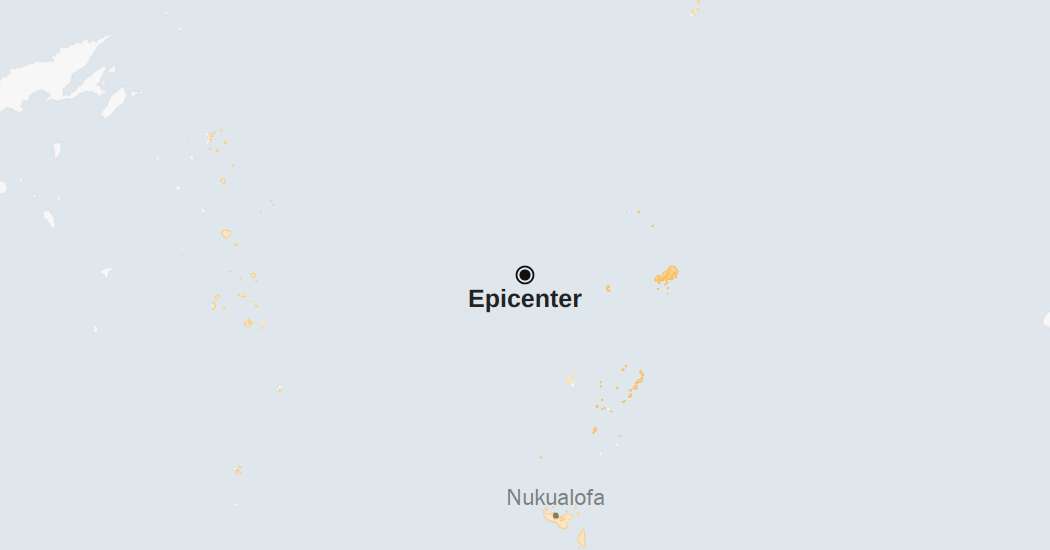
When a significant event occurs, like the 7.5-magnitude earthquake that recently impacted the South Pacific Ocean, the consequences can be far-reaching. The map data from The New York Times shows regions where ground shaking reached a 'light' intensity, but this does not mean the event was insignificant. In fact, the South Pacific event has been linked to a broader pattern of seismic activity that could indicate a more complex, multi-phase event.

Historically, the most powerful earthquakes have always been tied to the movement of tectonic plates. For example, the 2011 Tōhoku earthquake in Japan, which triggered a massive tsunami, was a result of the Pacific Plate subducting beneath the North American Plate. Such events are not isolated; they are part of a larger, interconnected system of plate movements.

Today's monitoring systems are designed to provide early warnings, but they often rely on data that can be delayed by the time it takes for seismic waves to travel from the epicenter to monitoring stations. This delay can be critical in areas where the impact of an earthquake is significant.

As we navigate this new landscape of seismic activity, the importance of accurate data and timely analysis cannot be overstated. The ability to distinguish between minor tremors and major events is crucial for public safety and scientific understanding.