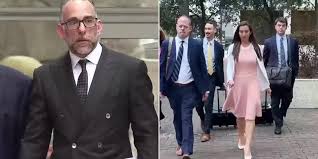
On Friday, a federal jury in New Orleans delivered a landmark verdict in a case that exposed a sophisticated scheme targeting insurance companies and personal injury lawyers. The jury found Vanessa Motta and Jason Giles, prominent New Orleans injury attorneys, guilty of multiple federal charges related to a scheme involving staged truck crashes designed to generate fraudulent insurance claims.
Prosecutors revealed that the scheme involved 'slammers'—individuals who intentionally caused collisions with 18-wheelers to create false accident reports. These incidents allowed participants to file lawsuits against trucking companies and insurance providers, ultimately securing significant financial payouts through insurance settlements. According to federal authorities, Motta and Giles facilitated the operation by guiding clients through the process, enabling them to exploit loopholes in insurance systems.
The trial, which lasted over five hours of deliberation, centered on allegations that the attorneys created and manipulated accident scenarios to maximize insurance claims. Federal prosecutors stated that the scheme generated millions in fraudulent payments, with victims including major insurance firms and trucking companies. The case highlights growing concerns about the use of staged accidents for financial gain and the complex legal challenges surrounding such operations.
During the trial, defense attorneys argued that the scheme was a result of complex economic pressures and misinterpretations of insurance policies. However, the jury rejected these arguments, finding both Motta and Giles guilty of conspiracy to commit mail fraud, wire fraud, obstruction of justice, and witness tampering. Both attorneys were immediately remanded to federal custody to await sentencing.
The verdict marks one of the most significant federal cases in recent years involving personal injury lawyers and has drawn attention to the intersection of legal practice, fraud, and insurance systems. Federal Judge Wendy Vitter’s ruling emphasized the seriousness of manipulating legal processes for financial gain, particularly when it involves creating false incidents that affect insurance claims.
Legal experts note that this case sets a precedent for addressing similar schemes that could threaten the integrity of insurance systems and legal services. The outcome may lead to stricter oversight of attorneys who exploit legal loopholes for personal gain, as well as increased scrutiny of the insurance claims process.
Advocates for transparency in legal systems have welcomed the decision, highlighting the importance of holding practitioners accountable for creating false incidents that could jeopardize public trust in insurance and legal frameworks. The case also raises questions about how to prevent similar schemes from recurring and the need for better safeguards within the legal and insurance industries.