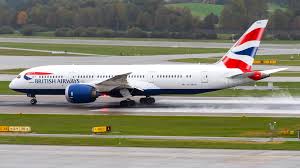
British Airways has launched its first Boeing 787-8 Dreamliner equipped with Starlink Wi-Fi, marking a pivotal moment in the integration of satellite-based internet into commercial aviation. The airline confirmed that its initial Starlink-enabled aircraft has entered active service after completing retrofit modifications at Heathrow Engineering Base. This initiative positions BA as a pioneer in delivering high-speed connectivity to passengers during long-haul flights, particularly on routes connecting major international hubs such as Mumbai (BOM), Montreal (YUL), and Cincinnati (CVG).
The rollout follows a strategic partnership with SpaceX, which provides the Starlink technology that enables real-time global internet access from the aircraft. British Airways has committed to a full fleet transformation within three years, with the goal of offering free high-speed connectivity to all passengers as competition intensifies across European and North American routes. This move is part of a broader industry shift toward seamless digital experiences for travelers, addressing growing demand for in-flight entertainment and communication tools.
Starlink, developed by Elon Musk’s SpaceX, has been a transformative force in internet infrastructure since its inception. Its integration into aircraft like the Boeing 787-8 allows airlines to bypass traditional ground-based infrastructure, providing uninterrupted connectivity even in remote or high-altitude regions where terrestrial networks are unavailable. The technology’s reliability and speed have been critical for airlines seeking to enhance passenger satisfaction and operational efficiency.
British Airways’ decision to adopt Starlink Wi-Fi reflects a growing trend among major carriers to leverage satellite networks for connectivity. Airlines previously relied on ground-based systems that often failed during extreme weather conditions or in remote areas. Starlink’s low-latency design and extensive global coverage offer a solution to these challenges, ensuring consistent service for passengers traveling across diverse geographical regions.
The initial deployment of Starlink on the Boeing 787-8 has been met with optimism from industry stakeholders. Aviation experts note that this initiative could set a precedent for other airlines to follow, particularly as the technology matures and costs decrease. However, challenges remain, including the potential impact on aircraft performance and the need for continuous technical updates to maintain optimal connectivity.
As part of this transition, British Airways has emphasized the importance of seamless integration between Starlink and existing aircraft systems. The retrofit process involves meticulous calibration to ensure that the satellite internet service works in harmony with the aircraft’s navigation and communication systems without disrupting flight operations.
Looking ahead, the success of this initiative will depend on several factors, including the scalability of Starlink’s infrastructure, the ability to maintain high-speed connectivity during adverse weather conditions, and the potential for further innovation in aircraft design to accommodate these systems.
The deployment of Starlink on British Airways’ fleet represents a significant milestone in the evolution of aviation connectivity. With more airlines adopting similar solutions, travelers can expect increasingly sophisticated in-flight experiences, from real-time communication to high-definition video streaming. This shift not only enhances passenger convenience but also opens new opportunities for airlines to deliver value-added services through digital platforms.