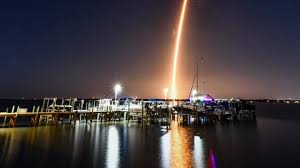
SpaceX Falcon 9 Launches 29 Starlink Satellites from Cape Canaveral, Florida

SpaceX has scheduled its next rocket launch for early Thursday morning, March 19, 2026, from Cape Canaveral Space Force Station in Florida. The mission, set to launch a Falcon 9 rocket carrying 29 Starlink satellites, marks a critical step in the ongoing expansion of SpaceX's global satellite network. The launch window spans from 6:35 a.m. to 10:35 a.m. Eastern Time, with the actual liftoff dependent on weather conditions and technical readiness.

The launch site, Launch Complex 40 at Cape Canaveral, has been a frequent staging ground for SpaceX operations. This mission is part of the Starlink 10-33 batch, which aims to enhance global internet connectivity through low Earth orbit satellites. As one of the most ambitious projects in space exploration, Starlink has already deployed over 1,000 satellites across more than 150 countries, supporting critical communication needs in remote and underserved regions.

According to Florida Today, the upcoming launch follows a series of successful missions, including a recent Falcon 9 launch that delivered 29 Starlink satellites to orbit. The Starlink network, designed to provide high-speed internet access to remote areas, has become a vital infrastructure for emergency services, education, and business operations worldwide. This launch represents another milestone in SpaceX's goal to create a fully operational global satellite internet system.

Launch operations are conducted under strict protocols to ensure safety and precision. The Falcon 9 rocket, equipped with reusable components, is designed to return to Earth after delivering payloads to orbit. The first-stage booster is expected to land on a drone ship in the Atlantic Ocean, a practice that has significantly reduced the cost of space launches while maintaining high reliability.

SpaceX's strategy of reusing rocket components has revolutionized the aerospace industry, cutting costs by up to 90% compared to traditional one-time-use rockets. This innovation has enabled SpaceX to launch hundreds of missions annually, with the Starlink program alone contributing to over 50,000 satellites in orbit by 2026. The upcoming mission will further advance this technology, demonstrating the scalability of reusable rocket systems.

Environmental considerations are also a key factor in SpaceX's operations. The launch site in Florida, known for its favorable launch conditions and strategic location, has seen minimal impact on local ecosystems due to SpaceX's adherence to environmental regulations and partnerships with federal agencies. The company has implemented measures to mitigate noise pollution and reduce electromagnetic interference in surrounding communities.

The Starlink satellite network has become increasingly vital during global crises, such as natural disasters and pandemics, providing critical communication infrastructure where traditional networks are unavailable. With the next launch, SpaceX aims to strengthen its capacity to deliver uninterrupted connectivity to remote areas, supporting both commercial and humanitarian needs globally.

Share Article