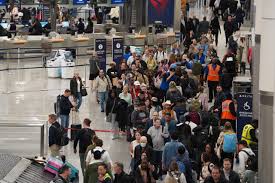
TSA Staff Shortages and Unpaid Workers Drive Unpredictable Airport Wait Times

Recent data shows a growing crisis at U.S. airports as Transportation Security Administration (TSA) officers face extended periods without pay, leading to significant delays and safety concerns for travelers. The situation has become particularly acute with the ongoing partial government shutdown affecting critical infrastructure, including airport security operations.

According to a recent CNN report, travelers nationwide are experiencing unpredictable wait times at major airports due to TSA staff shortages. The shortage has been exacerbated by the fact that many TSA officers have gone weeks without receiving their pay, despite their critical role in screening passengers and ensuring airport safety. This has created a ripple effect across the travel ecosystem, with airlines, airports, and passengers all feeling the impact.

The partial government shutdown has highlighted a systemic issue within the federal workforce, where many TSA employees are now working without compensation. This situation has not only strained the operational capacity of airports but has also raised serious questions about the sustainability of government funding for essential public services. With airports like Atlanta’s Hartsfield-Jackson International, the nation’s busiest, now facing potential disruptions, the implications for millions of daily travelers are severe.

At the world's busiest airport, Atlanta’s Hartsfield-Jackson International, TSA officers have been working without pay for several weeks. The impact is immediate and visible, with passengers waiting longer than usual for security checks, and some even facing delays that could exceed an hour. This situation has forced many officers to weigh between showing up at work or staying afloat financially, a dilemma that has become increasingly common among federal employees in the current economic climate.

Experts warn that the absence of paid TSA staff is creating a dangerous gap in airport security. Without proper staffing, the ability to screen passengers effectively is compromised, increasing the risk of security breaches. The situation is particularly concerning given the high volume of travelers at major hubs, where even minor delays can have a significant impact on the entire travel ecosystem.

The government shutdown has also exposed the fragility of federal employment systems, where critical services often rely on the ability of workers to receive timely payments. With TSA officers now working without pay, the immediate need for a solution is urgent, as delays in security screening can lead to cascading disruptions across multiple transportation networks.

Travelers are increasingly affected by these issues, with many reporting longer wait times, reduced security checks, and a general sense of uncertainty about when they can expect to complete their travel plans. The situation has also led to increased frustration among passengers, who have to navigate complex systems without clear communication about potential delays.

Efforts to resolve the staffing crisis have been underway, but progress has been slow. Federal agencies are working to address the issue, but the immediate impact on travelers remains significant. As the partial government shutdown continues, the situation at airports is expected to worsen without further action.

Without immediate intervention, the consequences of TSA staff shortages could extend beyond airports, impacting the broader economy and public safety. The government’s response to this crisis will be critical in determining how effectively airports can manage the current situation and prevent further disruption to air travel.

Share Article