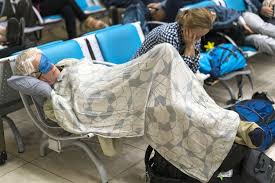
Travelers across the United States are increasingly forced to seek shelter in unconventional spaces as flight cancellations and airport staffing shortages intensify. With thousands of flights canceled or delayed, passengers report sleeping on airport floors, a practice once considered unusual in modern air travel. This crisis has been exacerbated by a partial government shutdown that has strained TSA operations and weather-related disruptions, creating a perfect storm of travel chaos.
The situation has become particularly severe in major hubs like JFK, where passengers face a dual crisis: severe weather conditions and critical shortages of TSA screening staff. According to reports from airport officials, some facilities have seen staffing levels drop by 30% compared to pre-shutdown levels, leaving travelers stranded at security checkpoints. The impact is felt most acutely by passengers who have no alternative accommodations, particularly those with tight schedules or urgent travel needs.
At the heart of this crisis is the partial government shutdown that began February 14. The shutdown has disrupted critical operations at TSA facilities nationwide, including airport screening areas. With security screeners unable to process passengers efficiently, airports like JFK have seen significant delays and cancellations. The Federal Aviation Administration has confirmed that over 15,000 flights have been affected across the country, with many travelers forced to spend hours in waiting areas or resort to sleeping on airport floors.
While the immediate cause of the disruptions is weather-related, with powerful storms sweeping across the eastern United States, the underlying issue has been the lack of adequate staffing at TSA facilities. Airport authorities have noted that the staffing shortage is a direct result of the government shutdown, which has left many TSA employees without pay or access to necessary resources. This has created a ripple effect across the entire travel ecosystem, from airlines to airports to passengers.
Experts warn that if the situation continues, the economic impact could be significant. The airline industry, already reeling from previous disruptions, is facing additional financial strain as passengers cancel bookings and airlines struggle to rebook flights. For many, the inability to secure a seat on a flight has become a daily reality, with some reporting that they have had to spend nights in airport waiting areas, often in uncomfortable and unsanitary conditions.
The crisis has also raised questions about the adequacy of current emergency protocols for handling large-scale disruptions. While airports have contingency plans for weather-related issues, the sudden onset of a government shutdown has created a gap in preparedness. Travelers are increasingly turning to alternative solutions, such as sleeping on airport floors, as a last resort when all other options are exhausted.
As the situation continues to evolve, industry stakeholders are urging immediate action to address the staffing shortages and improve communication channels between airlines, airports, and TSA. With the partial government shutdown expected to last at least another week, the number of affected travelers is likely to increase, putting further strain on already overburdened systems.