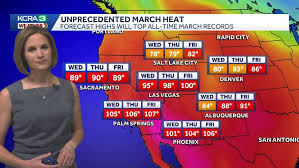
California is experiencing an extraordinary weather pattern that has scientists and meteorologists scrambling to track its implications. The state is on the brink of setting new all-time March record temperatures across multiple regions, from the West Coast to the Front Range of the Rockies. This unprecedented heat wave is not isolated to a single location but is unfolding across a vast geographic area, creating a significant deviation from historical climate norms.
According to the National Weather Service, several regions in Northern California have already recorded temperatures exceeding 80 degrees Fahrenheit, a substantial increase from the typical March average of around 60-65 degrees. The data shows a clear pattern of warming that spans multiple days, with some areas hitting 86 degrees, well above previous records. This pattern is part of a broader trend that has been observed across the Western United States over the past decade.
Scientists at the University of California, San Diego, are analyzing this event as part of a potential shift in the jet stream patterns. The current weather system appears to be a 'heat dome' phenomenon, where high-pressure systems trap warm air over large areas. This phenomenon has been linked to increased temperatures in multiple states, including California, Nevada, and Arizona. The implications of such a prolonged heat wave could be significant for both local ecosystems and regional climate patterns.
The impact of this heat wave extends beyond just temperature records. Researchers at Stanford University note that these extreme temperatures are accelerating the rate of snowmelt in mountainous regions, which could lead to water shortages in the coming months. Additionally, the heat is causing unusual weather patterns that may affect agricultural regions and urban water supplies, creating a complex interplay between meteorological events and resource management.
Public health officials are sounding the alarm about the potential health risks associated with these extreme temperatures. Hospitals in San Francisco and Los Angeles are reporting an increase in heat-related illnesses, particularly among elderly populations and those with pre-existing health conditions. The California Department of Public Health has issued heat advisories for multiple counties, urging residents to stay hydrated and avoid outdoor activities during peak heat hours.
Climate experts warn that this event is not an isolated incident but part of a larger pattern of increasing temperature extremes. As global temperatures rise, the frequency and intensity of such heat waves are expected to increase, with potential consequences for infrastructure, agriculture, and ecosystems across the Western United States. The current event provides a critical case study for understanding how climate change is altering weather patterns at a regional and national scale.
Local governments and emergency services are preparing for potential disruptions. In San Francisco, city officials have activated their heat emergency protocols, including increased patrols and emergency response teams. Similar measures are being implemented in Los Angeles and other regions across the state. These preparations highlight the growing urgency of addressing the impacts of extreme weather events in an increasingly volatile climate.
Long-term implications of this heat wave include potential shifts in the traditional seasonal patterns that have governed Western weather for decades. The current event could serve as a catalyst for more comprehensive climate adaptation strategies, including improved infrastructure resilience, better water management systems, and more targeted public health interventions.