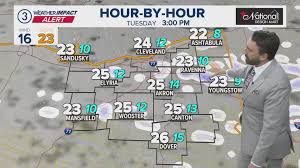
Northeast Ohio is currently facing a new round of intense lake-effect snow as the National Weather Service issues a Winter Weather Advisory for several counties, including Cuyahoga, Lake, Geauga, Ashtabula, and Trumbull. This developing situation highlights the recurring challenge of extreme winter weather patterns in the region, particularly those driven by the interaction between cold air and the relatively warmer waters of Lake Erie and Lake Michigan.
The advisory, effective from 5 p.m. Wednesday through midnight, warns of significant snow accumulation, with local snowfall totals potentially exceeding two inches in some areas. This event is part of a broader pattern of lake-effect snow that typically impacts the Great Lakes region during late fall and early winter, when cold air moves over the relatively warmer lake waters, triggering heavy precipitation.
As the weather system develops, meteorologists emphasize that the combination of strong winds and a deepening temperature gradient will further enhance the snow production potential. The National Weather Service has noted that these conditions could lead to hazardous travel conditions, especially in rural and remote areas where snow accumulation may be more severe than in urban centers.
Residents in the affected counties should expect fluctuating temperatures, with lows dropping to 25-30 degrees Fahrenheit in the coming hours. This rapid temperature change, coupled with the potential for heavy snowfall, creates a high risk for reduced visibility and compromised road safety.
The Winter Weather Advisory is not an isolated event but part of a recurring seasonal phenomenon that has become increasingly significant in the Great Lakes region. Over the past decade, these lake-effect snow events have shown a tendency to intensify due to climate patterns that favor prolonged periods of cold air and strong winds.
Emergency management officials are urging residents to prepare for potential power outages and traffic disruptions. The National Weather Service has advised that people in the advisory area should monitor local news for updates, as the situation could evolve rapidly with changing weather conditions.
While this advisory is a reminder of the region's vulnerability to sudden weather changes, it also underscores the importance of advanced warning systems and community preparedness. The National Weather Service continues to monitor the situation closely, with potential updates expected throughout the evening.