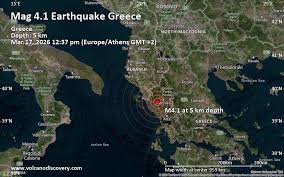
Residents across the Epirus region of Greece experienced a moderate 4.1 magnitude earthquake on March 17, 2026, centered near Ioannina. The tremors were detected by multiple seismic networks, including the National Observatory of Greece and the European-Mediterranean Seismological Centre. Initial reports indicated minimal structural damage, though localized concerns were raised about infrastructure stability in older building zones.
The earthquake occurred at 10:30 a.m. local time, with the epicenter located approximately 20 kilometers northwest of Ioannina city. Seismologists noted that the depth of the quake was relatively shallow at 10 kilometers, which typically increases the risk of surface rupture and localized ground failure. The United States Geological Survey (USGS) confirmed the magnitude, noting that the event falls within the range of typical tectonic activity in the Hellenic Arc, a seismically active zone along Greece's southern border.
Emergency services in the region reported that the tremors were felt across several municipalities, including Ioannina, Larissa, and Kilkis. Local authorities activated emergency protocols for affected areas, with the Greek Ministry of Interior dispatching teams to assess damage and coordinate relief efforts. Despite the relatively low magnitude, the timing of the quake during a period of heightened seismic activity in the region has raised questions about potential clustering of seismic events.
Geologists from the National Observatory of Greece emphasized that while this event was not unprecedented, the combination of the shallow depth and proximity to populated areas necessitates ongoing monitoring. The region has experienced a series of minor seismic events in recent months, with the most significant being a 4.8 magnitude quake in February 2026 that caused minor damage in the same area.
The earthquake has prompted a review of building codes in the Epirus region, particularly for older structures constructed with masonry and brick. Engineers are working with local authorities to implement temporary reinforcement measures for vulnerable buildings, ensuring compliance with updated seismic standards. The European-Mediterranean Seismological Centre highlighted that the event aligns with the region's historical pattern of moderate to low-magnitude earthquakes, with the average recurrence interval of 10-20 years for similar events.
While the immediate impact appears limited, the incident underscores the importance of preparedness and continuous monitoring in seismically active regions. Experts advise that communities in Greece's Hellenic Arc should maintain robust early warning systems and regular drills to mitigate risks associated with future events. The Greek government has pledged to enhance seismic monitoring capabilities in the region, particularly as climate change-related factors may influence the frequency and intensity of seismic activity in the coming years.