SpaceX Executes Critical Starlink Deployment as Friday the 13th Launch Prepares for Vandenberg

Editor 14 Mar, 2026 ... min lectura

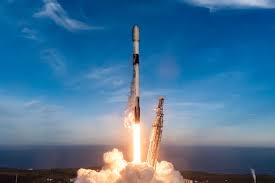
On March 13, 2026, a SpaceX Falcon 9 rocket lifted off from Space Launch Complex 4 East at Vandenberg Space Force Base in California, marking a pivotal moment in the expansion of the Starlink satellite constellation. This launch, designated Starlink 17-31, successfully deployed 25 new broadband internet satellites into low Earth orbit. The mission, which began at 6:57:59 a.m. PDT (10:57:59 a.m. EDT / 14:57:59 UTC), represents the 25th mission supporting SpaceX’s ambitious global satellite network in the current calendar year.

The Falcon 9 rocket, carrying the 1071 first stage booster, was part of a broader strategy to accelerate the Starlink project’s timeline. With over 1,200 satellites already operational, the constellation aims to provide high-speed internet access to remote and underserved regions worldwide. This launch further strengthens the infrastructure critical for global connectivity, particularly in areas where traditional terrestrial networks are limited or nonexistent.

Notably, the Friday the 13th timing of this mission has drawn attention from industry analysts and space enthusiasts alike. While some view this as a coincidence, others speculate that such dates may influence operational planning due to their historical significance in high-stakes events. The U.S. Space Force confirmed that the mission required close coordination with military assets to ensure safe integration with existing space systems and to comply with national security protocols.

The Starlink 17-31 mission underscores the growing role of commercial spaceflight in national security and economic development. As the constellation expands, it has the potential to revolutionize communication systems, enabling real-time data transmission and emergency response capabilities in disaster zones. This launch also highlights the increasing collaboration between private space companies and government agencies in space operations.

Analysts suggest that the next phase of Starlink deployment will focus on enhancing data throughput and reducing latency. With the current fleet already capable of delivering speeds up to 100 Gbps, future iterations could push these metrics even further. The mission’s success is critical for maintaining the projected timeline of completing the full Starlink constellation by 2030, a milestone that would represent one of the largest private space initiatives in history.

The U.S. Space Force’s involvement in supporting this mission illustrates the evolving relationship between national security and commercial space activities. By leveraging commercial launch capabilities, the military gains access to cost-effective and flexible solutions for space-based services, while SpaceX continues to innovate in satellite technology.

As the Starlink constellation grows, it raises important questions about the future of space infrastructure. The launch demonstrates the scalability of modern space operations and the potential for private companies to drive technological advancements that benefit global communities. The next few months will be crucial as SpaceX and its partners work to integrate additional satellites while maintaining the high standards of safety and reliability required for space operations.