Fort Collins, Colorado — On March 12, 2026, extreme high winds unleashed a new wildfire crisis in northern Colorado, triggering evacuations, closing Colorado State University (CSU) campus, and forcing emergency responses across multiple jurisdictions. The incident, centered around the Sterry Fire, highlighted the escalating risks of climate-driven weather events in the Front Range region.
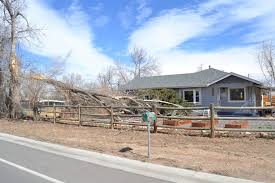
The Larimer County Wildland Fire Department reported that wind speeds reached 45 mph, causing trees to snap and ignite new fire zones. A broken tree, visible in photographs from The Coloradoan, lay in the front yard of a residence on North Shields Street, underscoring the immediate danger posed by these conditions. The fire rapidly expanded, prompting the closure of CSU’s main campus in Fort Collins, a critical educational and research hub.
Emergency officials confirmed that the Sterry Fire, initially a small blaze, grew into a significant threat within hours. By midday, evacuation orders were issued for neighborhoods near the fire’s perimeter, affecting thousands of residents. The Larimer County Office of Emergency Management issued a statement emphasizing the rapid development of the fire under high-wind conditions, which are becoming increasingly common in the region due to prolonged drought and warmer temperatures.
Residents in the affected areas described chaotic scenes as firefighters worked to contain the fire. One local resident shared, "The wind was so strong, it blew embers toward my house for miles. I had to evacuate immediately," highlighting the unpredictability of fire behavior in such conditions. The incident also revealed challenges in coordinating emergency response efforts across multiple agencies, as fire crews struggled to maintain safe distances from the fire’s edge.
Environmental experts linked the fire’s rapid spread to a combination of high winds, dry vegetation, and recent heavy rainfall that left debris on the ground. The Colorado Department of Natural Resources noted that the fire’s intensity increased as wind-driven embers traveled beyond the immediate perimeter, igniting additional areas within 24 hours.
CSU’s closure, effective immediately, was a precautionary measure to protect students, faculty, and staff. The university’s emergency management team worked closely with local fire departments to ensure a safe return for the campus community, with a full reopening expected within 72 hours. The closure also affected research projects and academic schedules, with faculty members adapting to remote learning for affected areas.
As the fire subsided, emergency crews focused on mop-up operations, clearing debris and ensuring no new hotspots emerged. The incident has sparked discussions about the need for more resilient infrastructure in fire-prone regions, particularly in areas with increasing wildfire risks due to climate change.