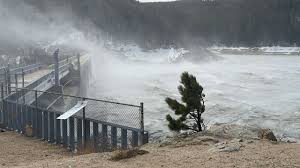
Colorado residents and travelers are currently grappling with significant disruptions caused by a rare and powerful weather phenomenon known as the 'mountain wave' or 'lambert wave.' This unusual atmospheric condition has led to extreme wind gusts reaching over 60 miles per hour along the Front Range, forcing the closure of critical infrastructure including Interstate 25 in Northern Colorado. Local authorities have confirmed that the closure spanned from Fort Collins to the Wyoming State Line, affecting multiple states and creating widespread travel challenges.
Understanding the Mountain Wave Phenomenon
The mountain wave, scientifically referred to as a 'lambert wave' in meteorological terms, is a rare atmospheric disturbance that occurs when strong winds interact with mountainous terrain. This interaction creates a series of standing waves that can develop into powerful, localized wind events. The Front Range of Colorado, with its unique topography, provides the perfect conditions for these phenomena to intensify, resulting in the extreme wind conditions observed across the state.
Immediate Impact on Transportation
Colorado Department of Transportation (CDOT) has confirmed that Interstate 25 was closed in both directions between Fort Collins and the Wyoming State Line, affecting thousands of commuters and freight operators. The closure, which began Thursday morning, was initially declared a 'First Alert Weather Day' due to the severe weather conditions. The closure lasted approximately 12 hours before being lifted as the wind conditions stabilized, though some areas remain under weather advisories.
Extended Road Closures and Safety Concerns
Emergency services and transportation officials report that the wind speeds, exceeding 60 mph in some areas, created hazardous conditions for vehicles, particularly near high-traffic corridors like I-25. The state's emergency management team has issued multiple warnings about potential debris and tree damage in the affected regions, with reports of significant tree uprooting in the Fort Collins area and around the I-25 corridor.
Public Response and Community Impact
Residents in Northern Colorado have been urged to avoid unnecessary travel through the affected areas, with many local businesses and schools implementing contingency plans for potential delays. The Front Range, which has historically experienced moderate weather variations, has seen unprecedented wind activity this week, causing widespread anxiety among residents who have experienced these conditions before but not at this scale.
Long-Term Implications and Climate Connections
Scientists at the National Weather Service and regional meteorological centers are actively monitoring this event to better understand the mechanisms behind mountain wave phenomena. While these events are relatively rare and typically localized, their impact on critical transportation networks like I-25 could lead to more comprehensive emergency response protocols in the coming months. The event also highlights the increasing frequency of extreme weather events across the Front Range, a trend that is expected to intensify with climate change.