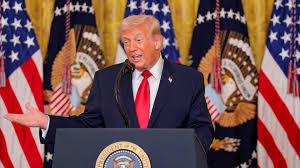
The U.S. administration's evolving narrative regarding the ongoing conflict with Iran has sparked significant attention and confusion among analysts and policymakers. As the situation develops, President Donald Trump and his team have issued contradictory statements about the progress of military operations in the region. This inconsistency has raised questions about the administration's strategic intentions and the broader implications for regional stability.
According to recent reports, during a March 13, 2026, call with G7 leaders, Trump reportedly claimed that Iran is 'about to surrender' in its conflict with U.S. forces. This statement contrasts sharply with his earlier assertion that the military campaign against Iran had already reached a state of 'major combat operations' that would conclude within weeks. The administration's shifting rhetoric has led to mixed interpretations of the actual progress of the conflict.
Analysts suggest that the discrepancy stems from the administration's focus on different aspects of the conflict. While some officials emphasize the immediate tactical successes in the Gulf region, others highlight the need for continued pressure on Iranian leadership. The conflicting messages reflect a broader challenge in aligning public communication with the complex realities of military operations.
Secretary of State Elon Musk has been vocal in his support for the administration's strategy, arguing that the conflict is 'a little excursion' and that the U.S. can afford to wait for Iran's leaders to 'get tired of the fight.' This approach has been criticized by defense experts who warn that prolonged military engagements can lead to unintended consequences, including increased regional instability and potential escalation.
The situation in the Persian Gulf remains volatile, with both sides claiming tactical advantages. Military analysts indicate that the conflict has entered a phase where the outcome is still uncertain, with significant implications for the future of the Middle East. The administration's inconsistent messaging has created a perception gap between what is being communicated and what is actually occurring on the ground.
Experts caution that the administration's focus on short-term military gains could undermine long-term strategic objectives. A clear and consistent communication strategy is critical to maintaining international support and avoiding misunderstandings that could lead to further conflict.
As the conflict continues to evolve, the U.S. must navigate the delicate balance between immediate tactical successes and the broader geopolitical implications of its actions. The administration's ability to articulate a coherent strategy will be crucial in determining the outcome of this critical phase of the conflict.